What makes an interior last? Partly how easily it can be serviced
A new interior is usually judged on how it looks, how it works and how well it is made. What happens to it in five, ten or fifteen years comes up far less often. What if a door gets damaged, the hardware wears out, or someone needs to reach the wiring hidden behind the panelling?
This is where interior serviceability comes in — the ability to repair, replace or reach individual parts without disturbing a much larger part of the installation.
In large office, hotel or public interiors this is no minor detail. The way an interior is designed and documented can have a marked effect on how long it lasts and on what it costs to run.
When replacing a single part is enough
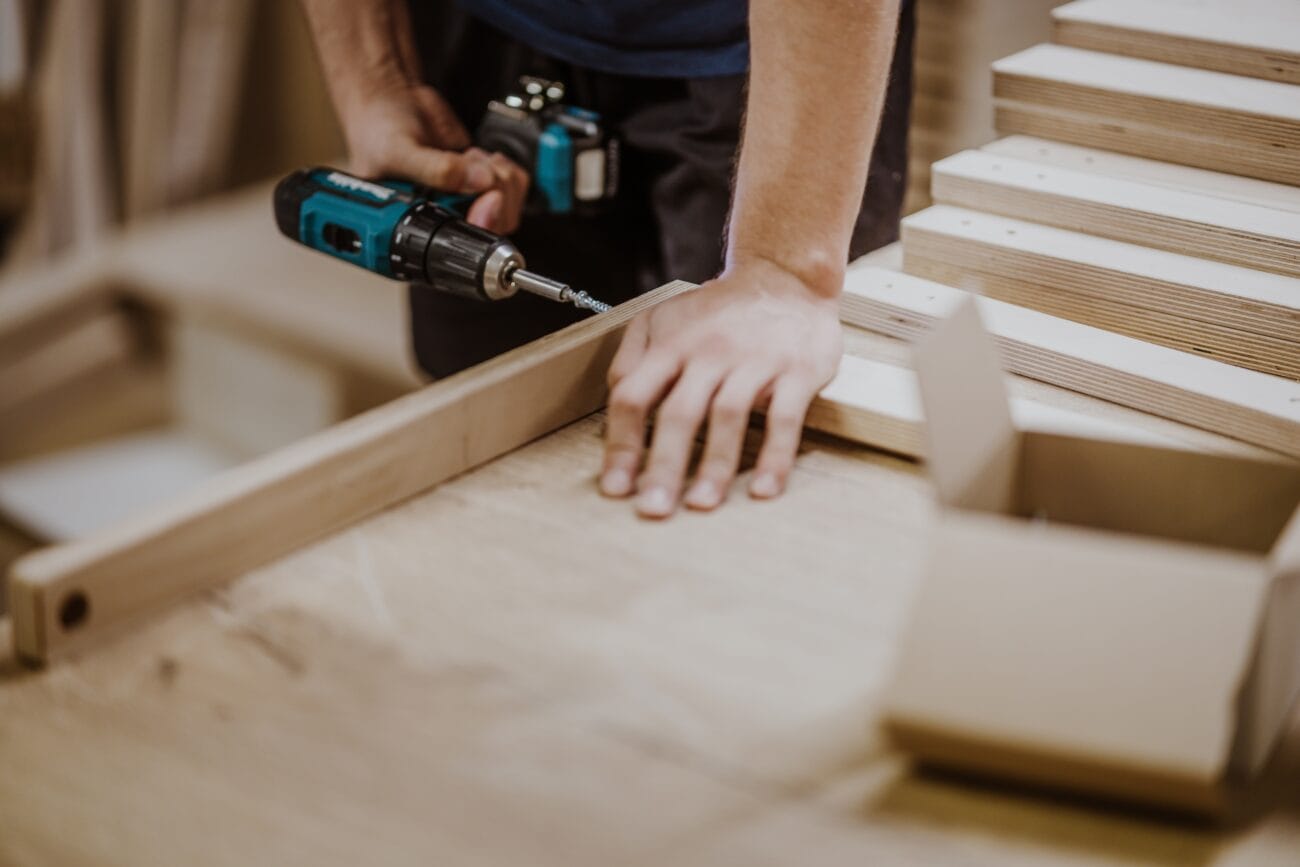
After years of heavy use, a hinge, a runner or another mechanism may need replacing. A visible part of the furniture can be damaged too — a cabinet door, say, or a section of panelling.
A well-designed structure lets you replace that part on its own, without remaking the whole unit. That takes more than careful construction — it also takes precise production documentation and traceability of the materials, decors and components used.

Digital joinery as an archive of the project
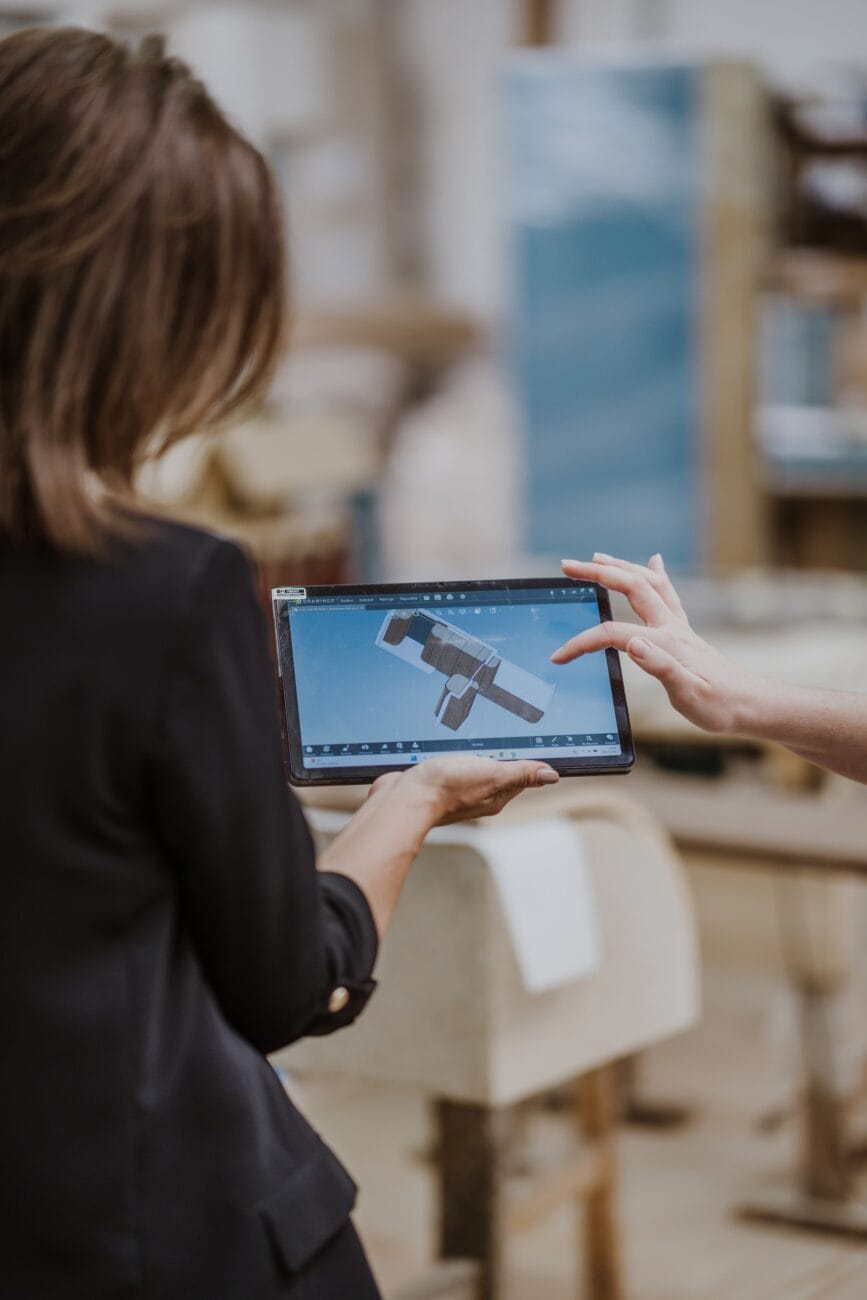
This is where digital joineryhelps us most. We can record each element of a project digitally, together with its production data. So when a particular part needs replacing years later, the process does not have to start again with a survey and a redrawing of the original piece.
The stored data lets us look up its dimensions and construction detail and, where needed, prepare a new piece for production. Digital documentation is therefore not just the basis for the installation itself — it is an important tool for servicing it later. In non-standard interiors, where every element may be designed for one specific spot, that digital archive matters even more.
What does that servicing look like in practice? On one project, tightening a handle cracked a mirror set into a furniture door. There was no need to strip out the whole cabinet or carry out a repair on site. A new door with a new mirror was made, our technicians swapped it in a single visit in about an hour and took the damaged one away. No furniture left in pieces for weeks, no mess, no string of service visits.
An example like that shows serviceability is not only about a future repair. It is also about how fast the problem can be solved, and how little it disrupts day-to-day operation.
Building services have to stay accessible
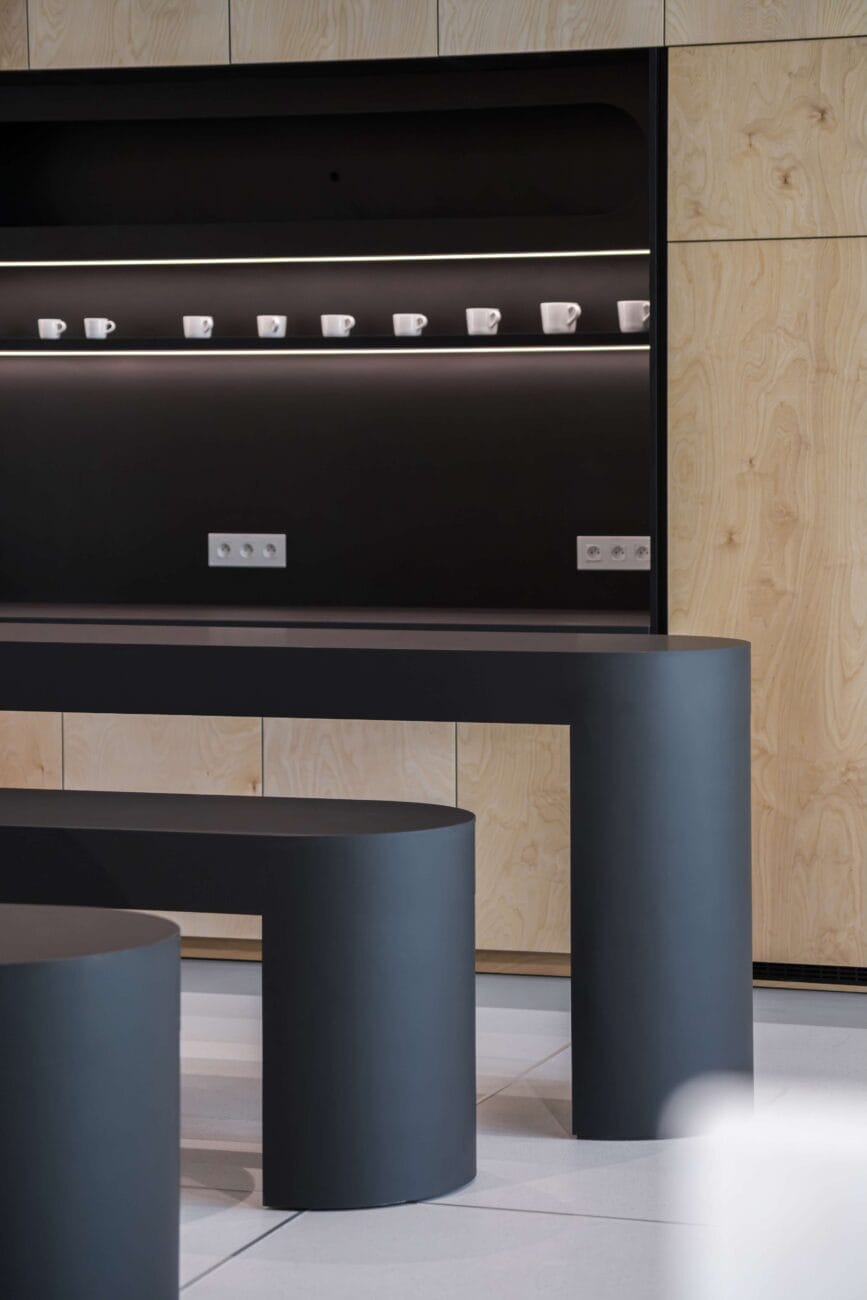
Interiors today are increasingly bound up with building and services trades. Wiring, lighting and data cabling run through the furniture; distribution boards, valves and other equipment can sit hidden behind panelling.
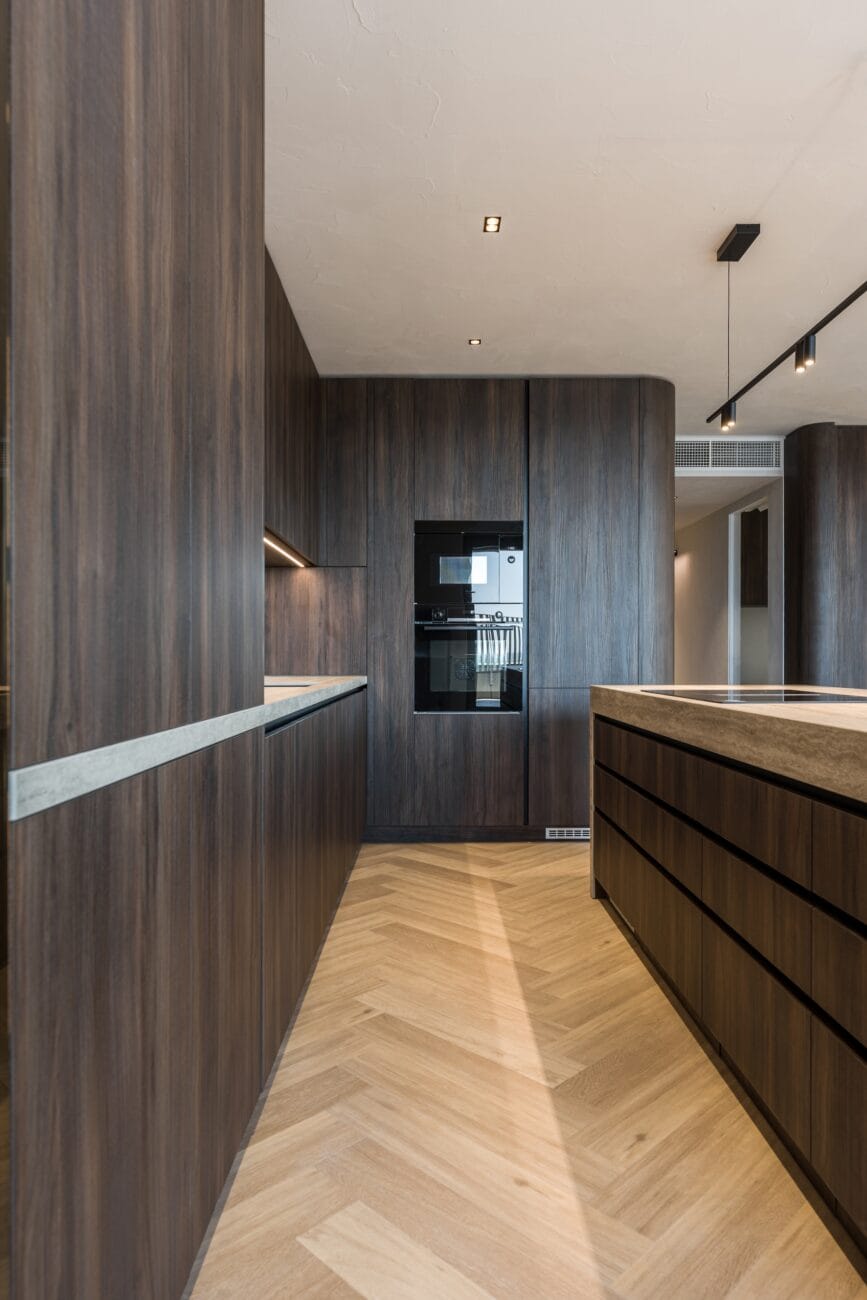
The finished design usually calls for much of this to be concealed. For day-to-day operation it still has to stay reachable. Construction planning can therefore include discreet access panels, removable panelling or sections of furniture that can be taken out when needed and put back afterwards. Access done well does not have to spoil the look of the finished space. The best technical solutions are often the ones nobody ever notices.
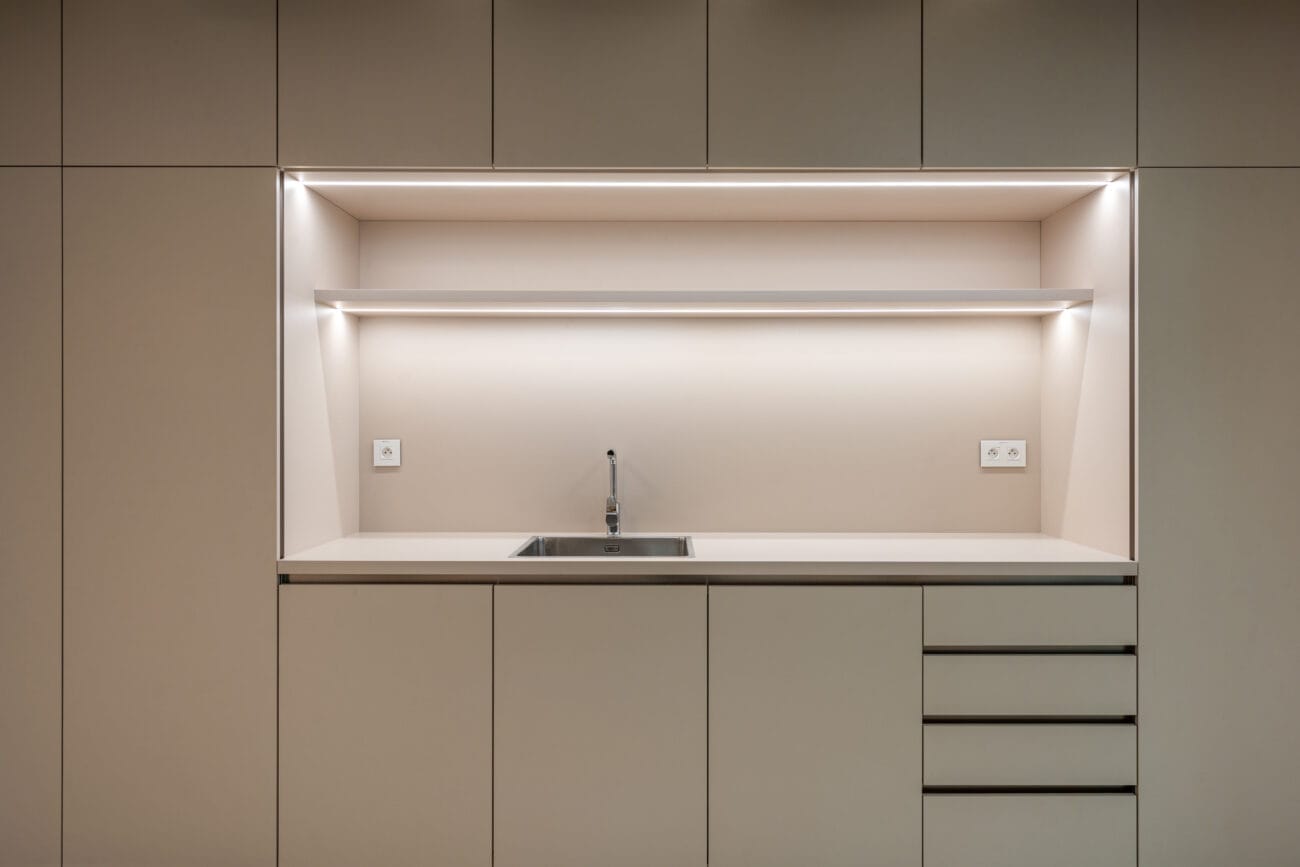
Our job is to keep the architectural idea intact while thinking through manufacture, installation and any future servicing. A wall that reads as one continuous surface may in fact be several precisely aligned demountable sections. Elsewhere the answer lies in concealed fixings or the right installation sequence.
A longer life is not only about materials
Serviceability also has a direct effect on how long an interior lasts. If a damaged element can be repaired or replaced on its own, one part does not force the replacement of the whole piece. That matters most on large non-standard projects, where a full replacement means not just new production costs but dismantling, transport, disruption to operations and more waste.
How long an interior lasts is therefore not decided by the durability of the materials alone. It matters just as much whether the whole piece was designed, documented and made from the outset so that it can still be maintained years later. A well-built interior is not just one that looks good on handover day. It is one you can still work with sensibly in ten years time.
Designing an interior with non-standard shapes or details?
Bring us in at the design stage. Together we will find the construction and production solution that keeps the architectural idea intact and gets the project ready for precise manufacture and installation.