How to spot quality furniture: five signs most people miss
Most furniture looks good at first glance these days. Modern design, interesting details, attractive colours. Quality, though, sits somewhere else entirely: in details a non-specialist often cannot see, or simply does not know to look for. Only daily use shows whether a piece holds up or starts to warp, creak and lose stability. Yet plenty of the signs are there to be spotted while you are still choosing.
So here are five signs most people miss – and they are exactly the ones that decide durability and comfort. Know them and you will avoid disappointment and put your money into furniture that serves you for years.
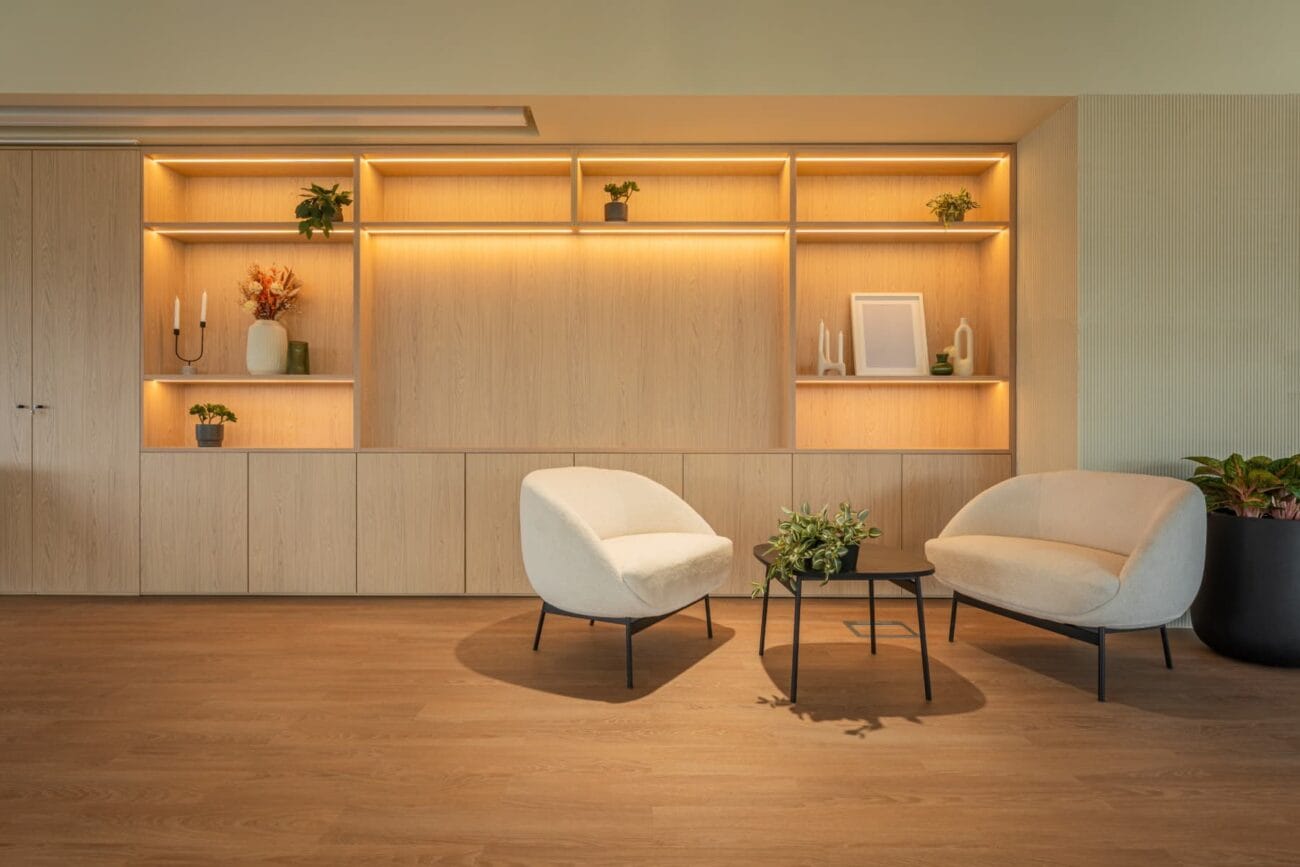
1. A material that can take daily use
Melamine-faced board (LTD) is the affordable classic: easy to look after, but it ages faster in demanding settings. Tougher high-pressure laminate (HPL) handles heat, moisture and mechanical stress, which is why it goes on worktops and table tops. For a natural look there is veneer, which pairs a modern board with the grain of real wood. It is more delicate, though, and needs a good surface finish.
The most robust option is solid wood or solid oak panel – materials that are strong, repairable and timeless in character, but also more sensitive to changes in humidity and temperature, more prone to small deformations, and in need of regular care to keep their looks over the years.
Another very stable option is plywood (PDP), whose layered construction holds its shape and does not crack even over larger spans. For the heaviest use and contact with water there is artificial stone (Technistone, Corian): strong, non-porous and hygienic.
When the material matches the use, good furniture keeps its shape and function for years. With bespoke furniture you also choose the material for exactly where it will serve: an office calls for one thing, a children’s room another, a restaurant another again.
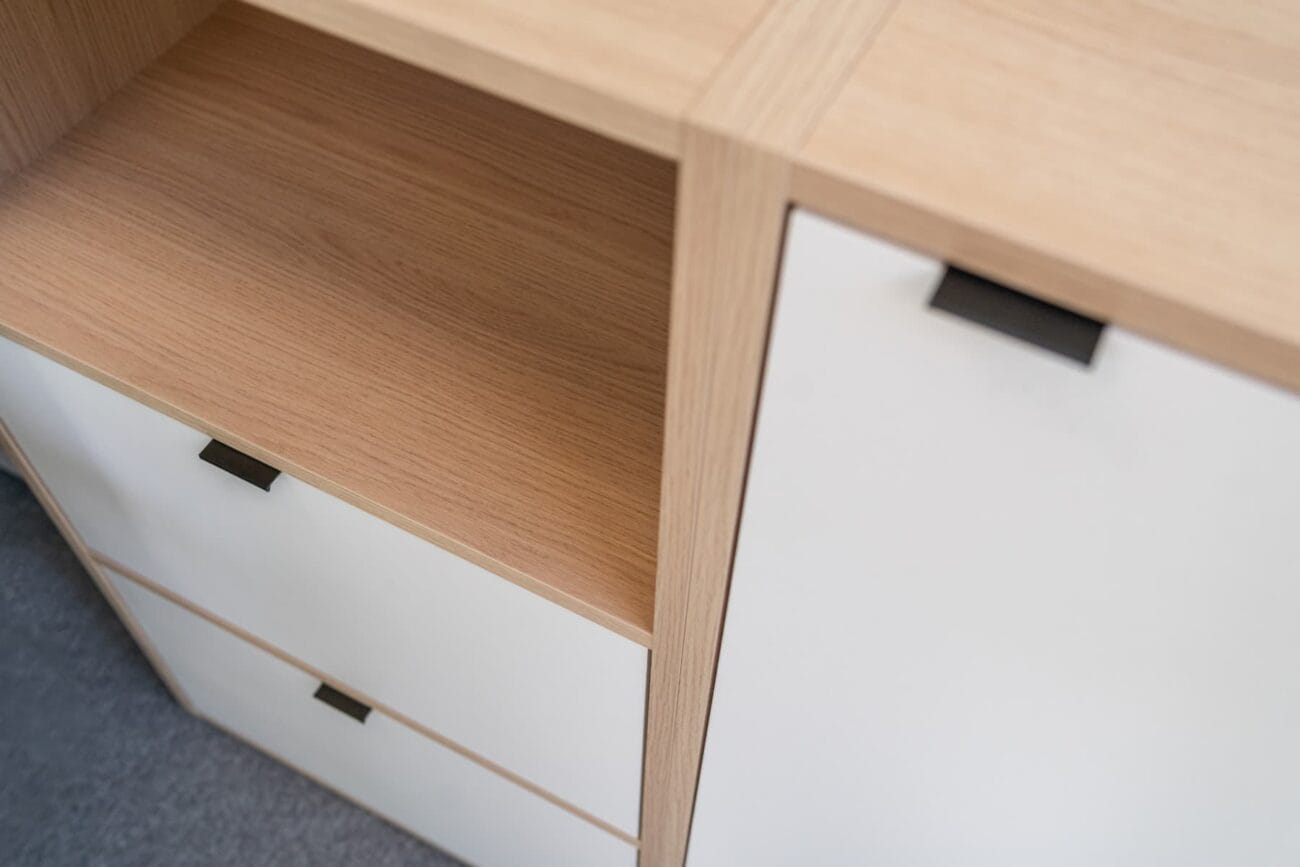
2. Edges that do not peel – and protect the whole carcass
The edge is an overlooked detail, yet it takes the heaviest punishment of all. This is where the difference between a cheap piece and properly made furniture shows.
Only a well-chosen edge, in both material and surface texture, gives furniture a clean, coherent look and brings out its design. It also does a protective job: it keeps moisture out, absorbs knocks and protects the most vulnerable part of the board from damage.
The most widespread choice is ABS edging, durable enough for homes and offices alike. Kitchen doors often get ABS edging with an aluminium finish, which stands up better to hard use. For a natural feel there is veneer edging or, better still, layered veneer edging, which matches the veneered board in both colour and texture. Melamine edging, by contrast, is the economical option – better suited to less exposed places with no heavy contact or moisture.
A quality edge sits flush, holds firmly and forms a tight joint with the board. Clean work, with no gaps and no lifting corners, significantly extends the life of the whole piece.
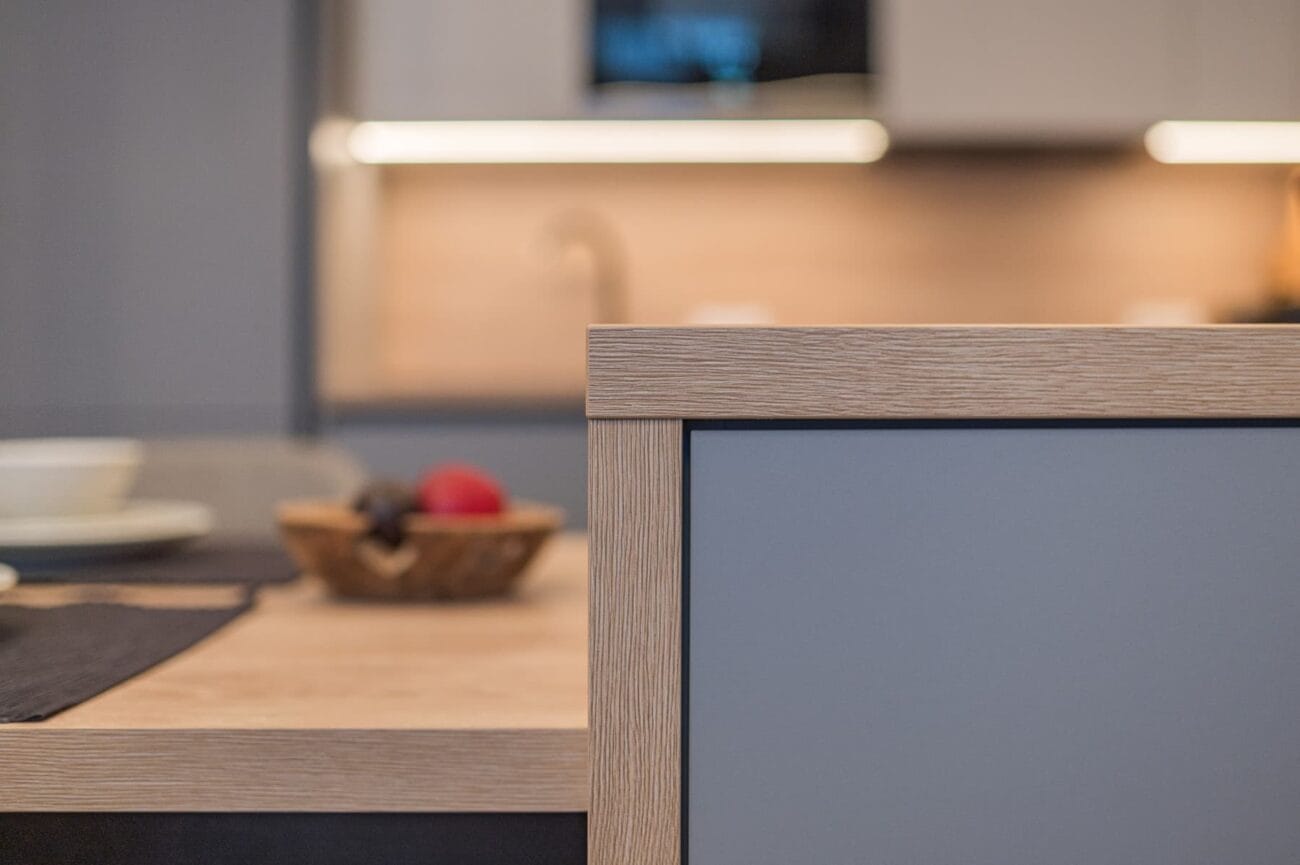
3. Good hardware is the foundation
Hardware is the technical core of a piece of furniture. You do not see it at first glance, but it decides how smoothly and quietly good furniture works day to day. Quality hardware moves cleanly, without creaking or sticking, and keeps doing so after years of use.
It starts with reliable hinges that let doors open without resistance and hold them perfectly aligned. Wall units do well with lift-up and stay systems that open almost effortlessly and stop exactly where you want them. Drawers depend on good runners and drawer systems – smooth travel, stability and load capacity are what make them comfortable to use.
Handles and pulls are ergonomic as well as decorative. The right handle gives you a secure grip and does not get in the way. Holding the whole structure together are the fixings, whose quality feeds straight into the strength and lifespan of the piece. Dampers, stops and other fittings matter too – they are what make doors and drawers close quietly.
Hardware is where cheaper production cuts corners most often, and you notice it fast – especially on large wardrobes and wall beds, where cheap mechanisms can even be dangerous. Good wall-bed mechanisms have an intermediate position that stops the frame from injuring anyone as it comes down. Once you have felt how well-chosen hardware works, you never miss the difference again.
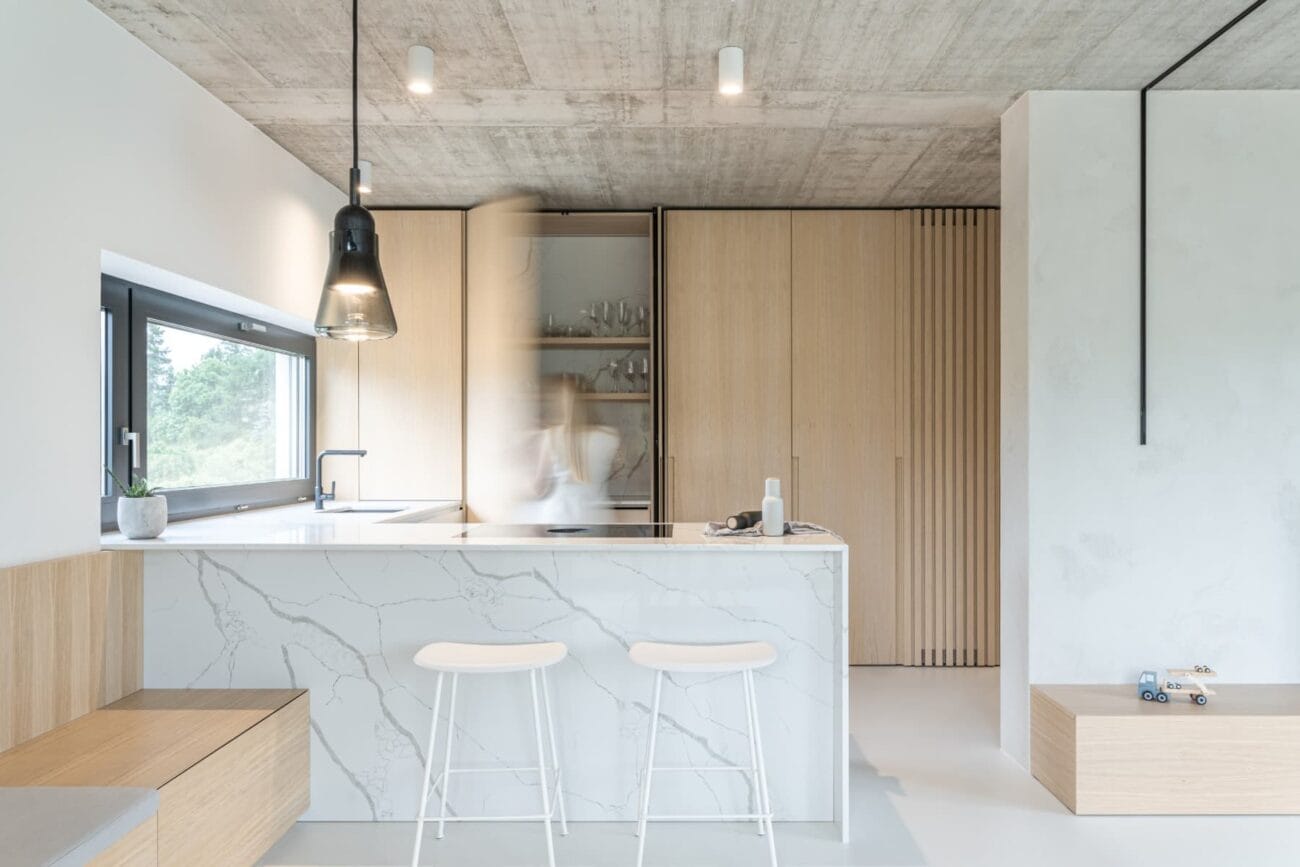
4. Precise workmanship and details
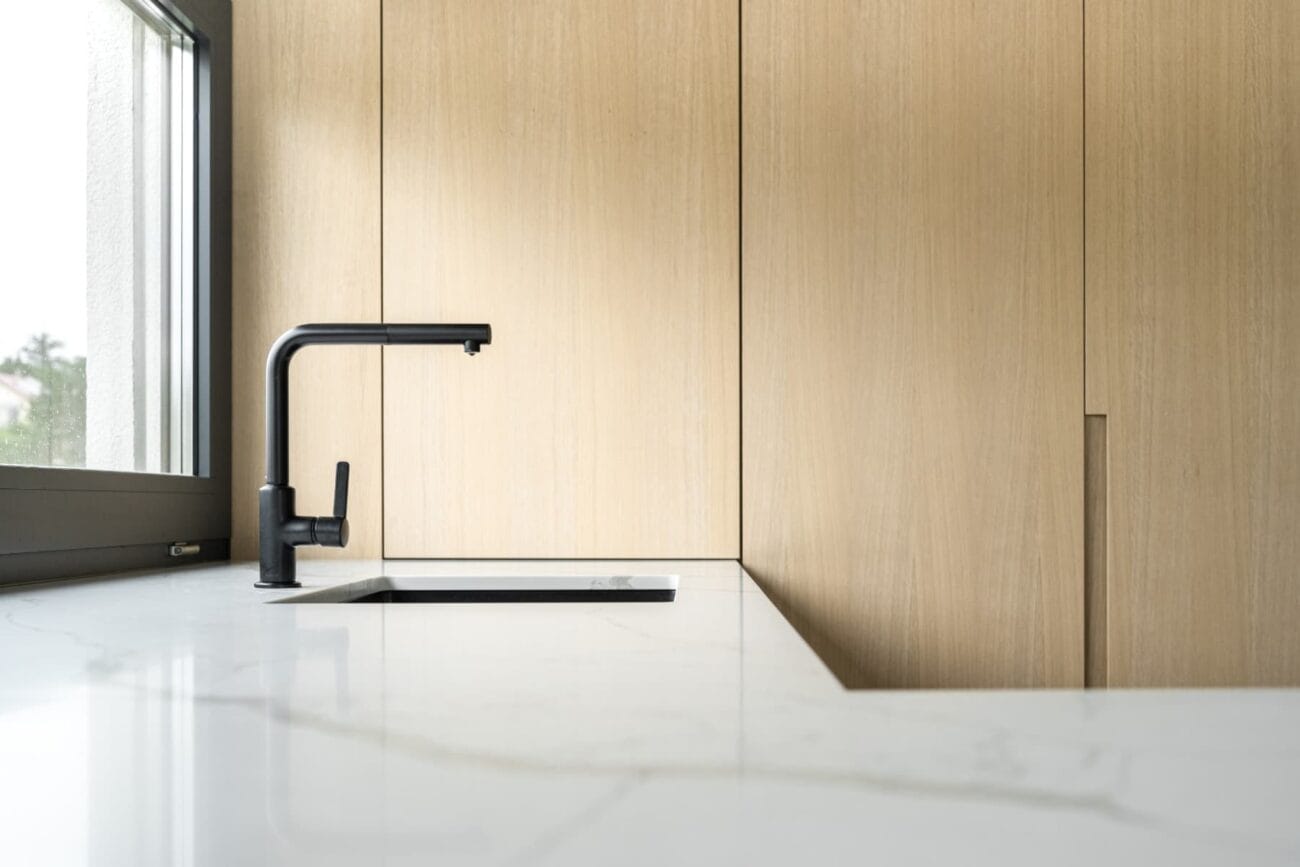
You recognise good furniture by details you may not see at first but feel immediately in use. Precise work shows in even gaps, in doors and corners that are properly aligned and really do fit. A door closes home with complete certainty. Drawers hold their line and never drift out of true.
Craft precision does not happen only in the workshop, it happens during installation too. Every space has its deviations: walls out of plumb, uneven floors, hidden building imperfections. This is where you see whether the maker pays attention. When furniture is adjusted on site, the gaps are even, the lines clean, and the separate parts read as one.
Precise execution is a sign that the structure holds its shape, the joints work as they should, and the piece will take long-term use without distorting. A well-made piece stays stable and functional even under daily load, one of the most reliable signs of real quality.
5. Stability and considered construction
Stability is no accident. Behind it stands sound structural design. That is what determines how the parts work together, how much load the shelves carry, how firmly the joints hold, and whether the piece survives daily use. The structure has to be designed so that nothing sags, wobbles or gradually twists.
A well designed and built piece stands firm, keeps its geometry and copes with an uneven space. A solid back panel, adequately sized shelves, firm anchoring and well-designed joints keep furniture from leaning over time and stop vibration travelling into the rest of the structure. Installation matters just as much: anchored properly to wall or floor, the piece stays stable even under heavy load.
Stability is one of the most reliable indicators of quality. Furniture that is well engineered does not give in to use and keeps its shape and function for the long haul. That is what separates an ordinary piece from properly made furniture that serves for years.
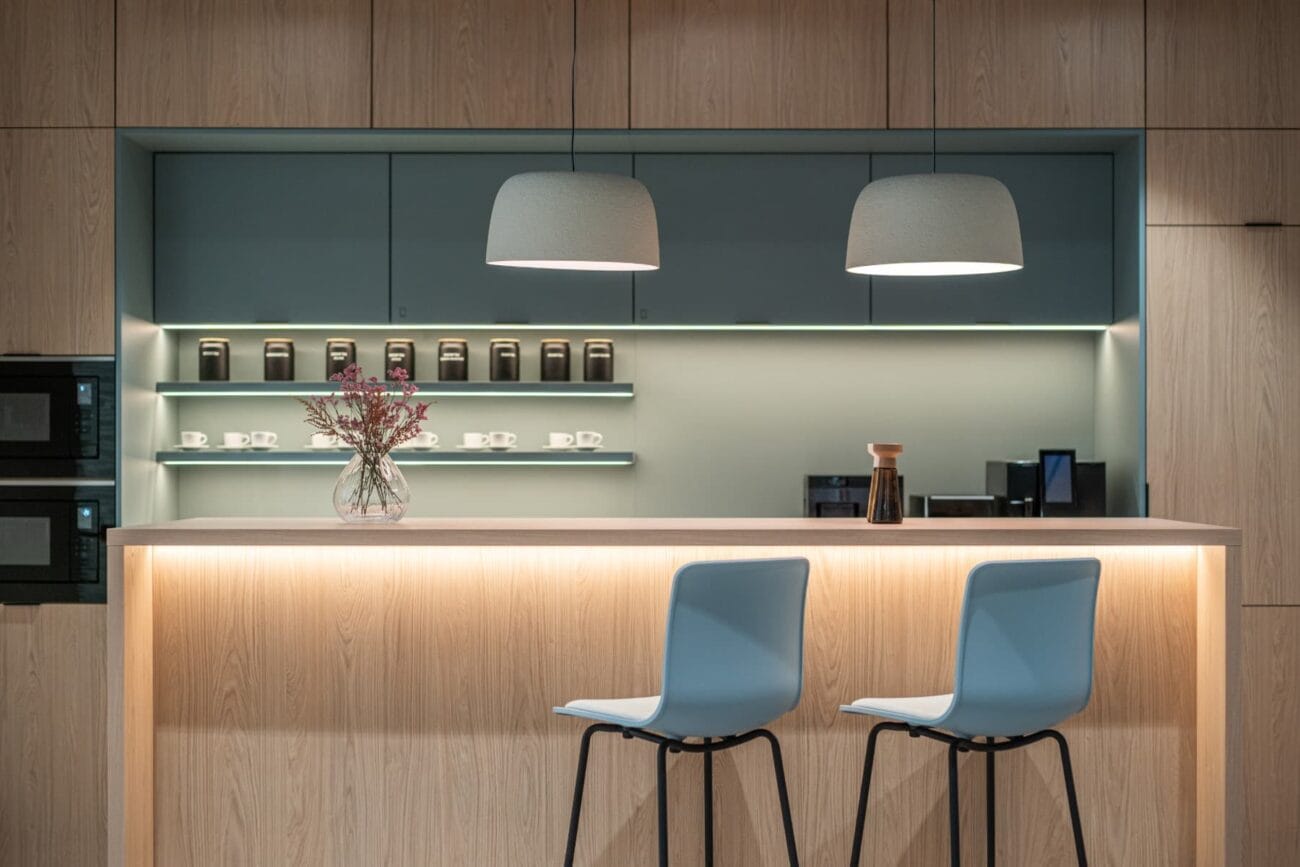
Furniture quality is the result of the maker’s experience, honest work and the ability to think the construction through down to the last detail. Anyone who has experienced the difference between a cheaper solution and precisely made furniture knows that comfort, quiet movement, stability and a long life are not a given.
Focus on these five signs while you are choosing and you sharply cut the risk of ending up with furniture that soon stops working as it should. The details a non-specialist misses are exactly what separates an ordinary piece from well-made furniture that holds its qualities for a long time. If you are looking for a furniture maker you can rely on whose work still performs in a few years time, you have just found one. Get in touch.