Hemp: turning agricultural waste into furniture
An oak takes decades to grow into furniture; industrial hemp needs a single season. In roughly 100 to 120 days it produces an enormous amount of biomass with strong fibres and wide potential for further use. That is where we see the future of interior materials.
We have long been looking for ways to extend traditional joinery with new, innovative and more sustainable materials. In collaboration with Mendel University in Brno we are currently testing how hemp waste can be used – specifically shives and other by-products of processing industrial hemp – to make interior elements and furniture.
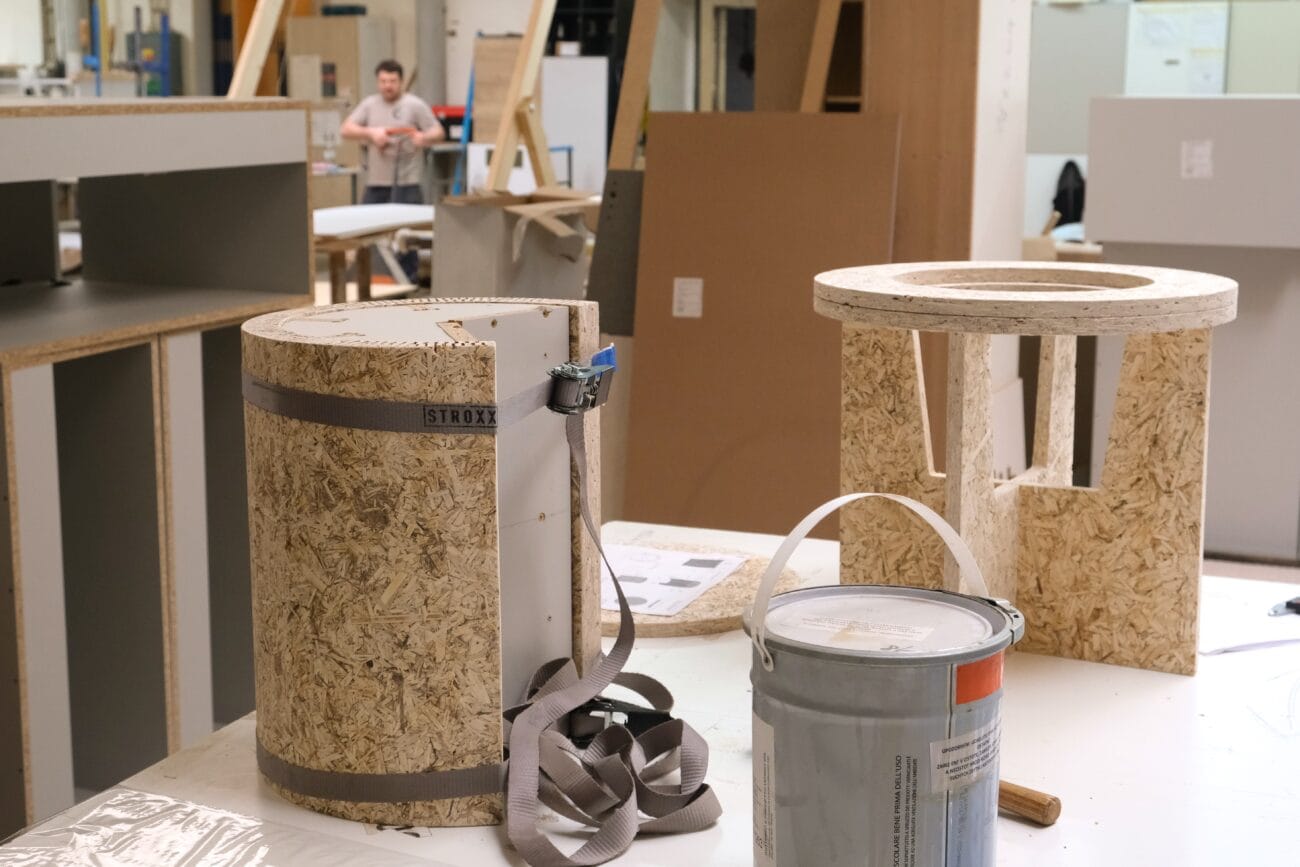
A material that grows faster than a forest
Ordinary chipboard is made from timber that takes years or decades to replace. A hemp board works with a material you can grow in a few months. Industrial hemp also yields a great deal of biomass per hectare and leaves very little unused waste behind.
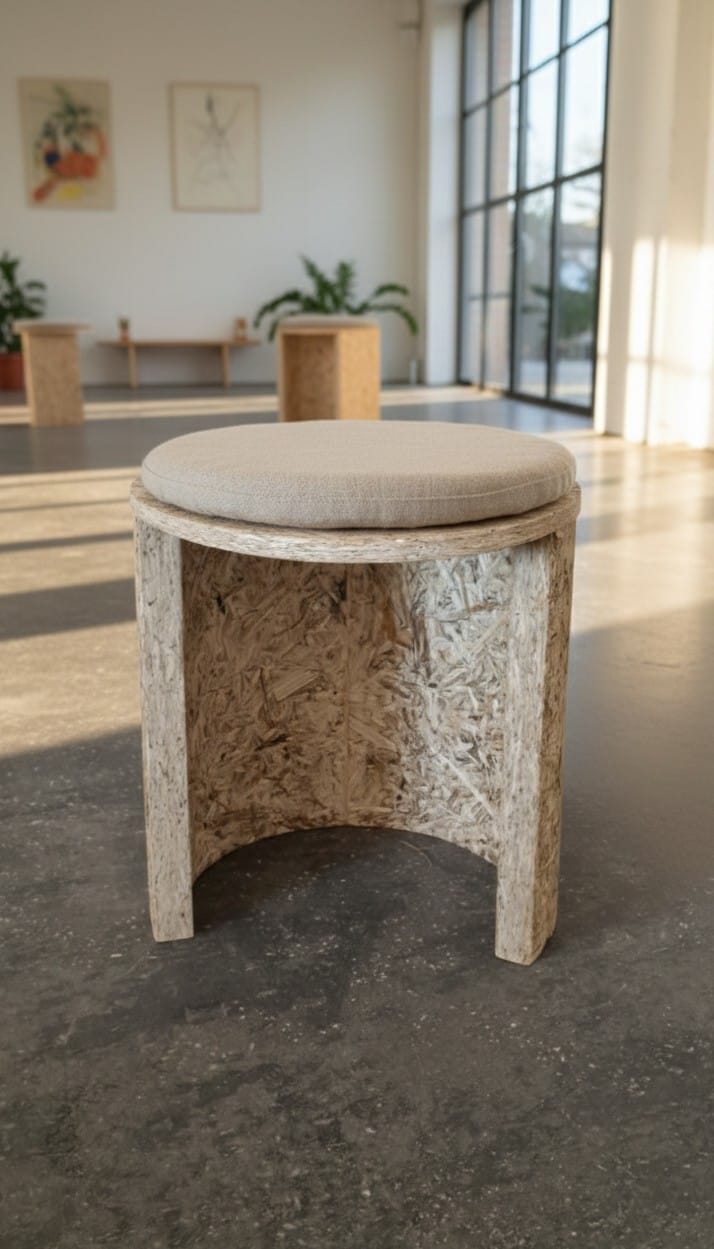
Beyond how quickly it renews, we are interested in how the material looks. The hemp structure has a raw, organic character that imitates neither wood nor plastic. It admits where it came from. We do not hide the edges or try to paint the material into something else. On the contrary, we want to show the structure of the stalks and fibres as they really are.
The first pieces showed that hemp board can be an interesting alternative to ordinary chipboard not only environmentally but visually and structurally.
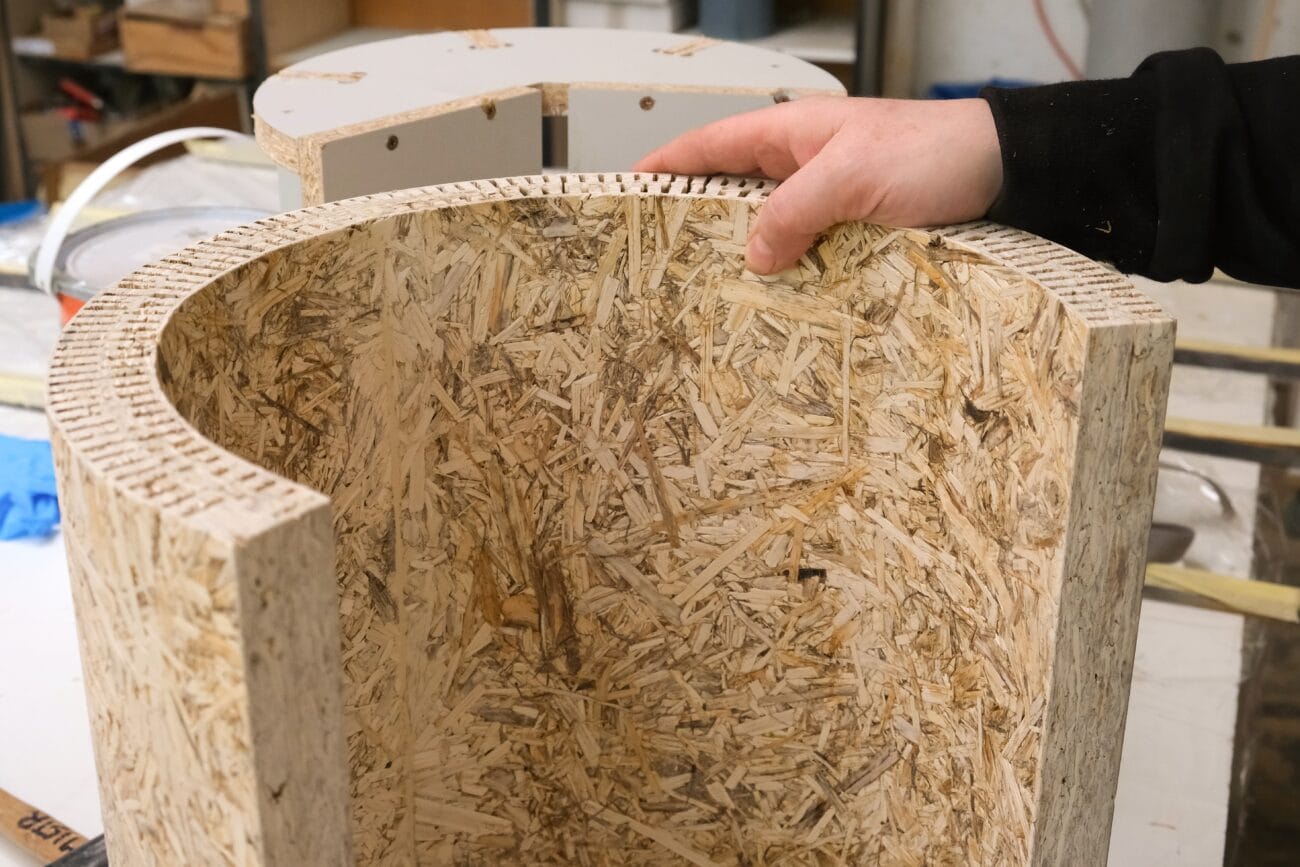
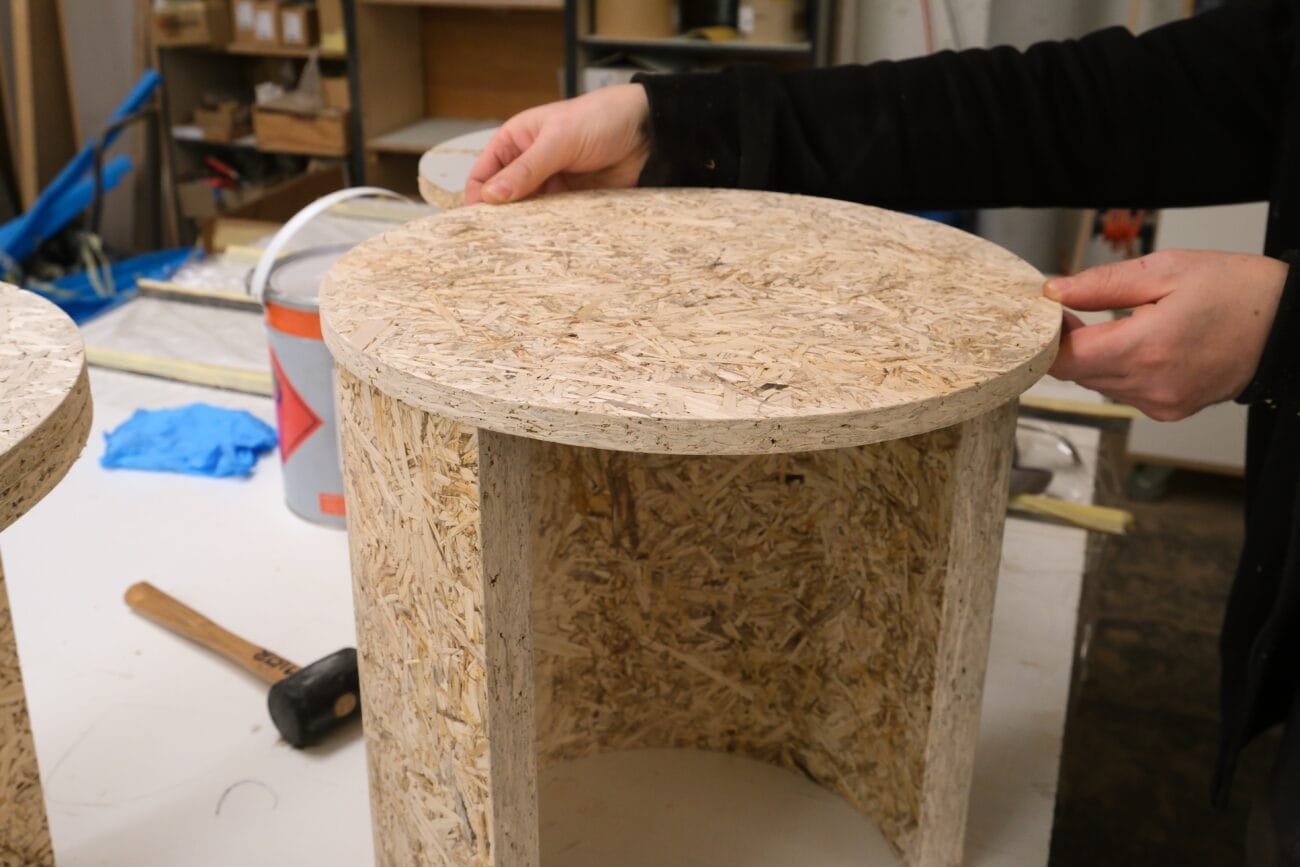
Some studies also suggest that hemp additions can improve the strength of the material.
How hemp behaves in production
We examined the material from many angles:
- how it behaves when routed and cut,
- whether the edges tear out,
- how sharp the tooling has to be,
- whether the board can be bent using kerf cuts,
- what minimum bend radius it takes,
- how it responds to sanding,
- which lacquers or oils seal its porous surface without losing the raw look.
Construction detail was another big theme. Where edges are on show, every cut has to be absolutely clean. The material needs very sharp tooling, precise CNC machining and a different approach from ordinary melamine-faced chipboard.
Testing means we now understand what the material can do and where its limits are. And that opens the way to using it for something worthwhile. Thinking about an interior in innovative or greener materials? We will gladly talk through how materials like these could work in your project. Get in touch.
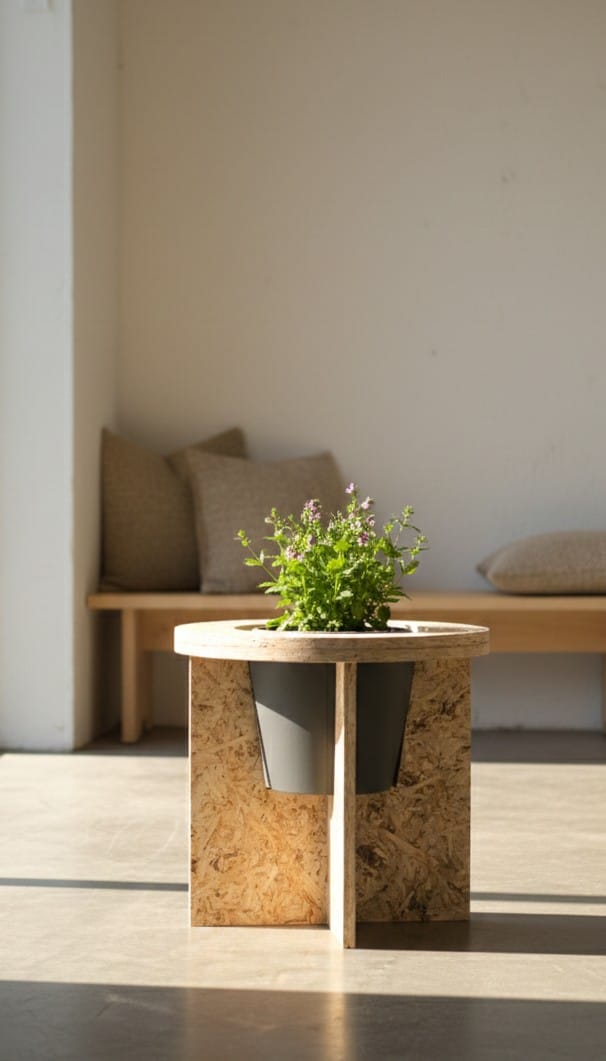
It is not only about the environment
Hemp interests us as more than a green material. We see it as a new structural and aesthetic language for contemporary interiors. Historically, hemp went into textiles, rope, paper and construction. Today it becomes insulation, biocomposites and alternatives to conventional board products.
We believe it will find its place in interior design and furniture making too.
And perhaps that is the greatest value of the whole project: we are not waiting until everything is perfect. We are learning to understand the material in the workshop itself. We test its limits, its possibilities and its failures. That is the only way something genuinely new comes about. The first hemp pieces are already in our workshop and we would be glad to show you what the material can do.
Want an interior that makes sense in its materials as well as its looks?
Get in touch. We will gladly talk through more sustainable options.