Measure, optimise, reduce: our carbon footprint from 2023 to 2025
Sustainability is not a one-off decision for us. It is a process that starts with data and continues into specific changes in how the company runs day to day. We have measured our carbon footprint since 2023 to the international GHG Protocol and ISO 14064 standards, specifically under Scope 1 and Scope 2 – that is, we track both our direct emissions (from burning fuel in production or transport, say) and the indirect emissions from the energy we buy and consume (electricity, heat).
That gives us a clear, comparable picture of the environmental impact of our production and operations – and where there is room to improve.
Without measurement you cannot manage change.
It is not about absolute numbers but about efficiency
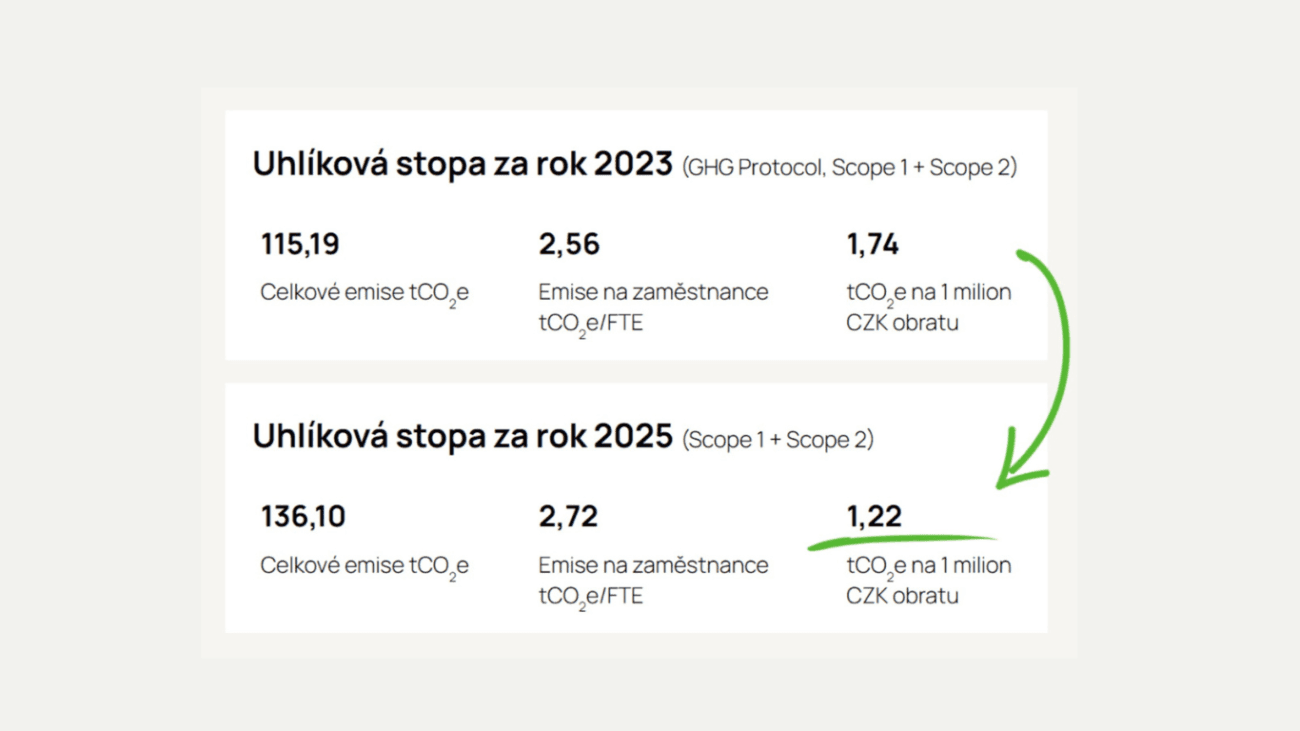
Comparing 2023 and 2025, it might look at first as though our total emissions have risen. From 115.19 tCO₂e in 2023 we reached 136.10 tCO₂e in 2025. But that view does not reflect how the company has actually developed. More important than absolute numbers is the relationship between emissions and output – how much we emit per unit of turnover.
And this is where the real shift shows. In 2023 we produced 1.74 tCO₂e per million CZK of turnover; in 2025 only 1.22 tCO₂e. Even with a higher volume of work we operate markedly more efficiently. In other words, we are growing with less impact.
Less outsourcing, more control over impact
Behind the shift are specific changes in how the company works. One of the most important is greater control over production. In 2024 we outsourced work worth almost 40 million CZK; in 2025 we did most of it in house.
That means fewer journeys between suppliers and fewer losses in coordinating jobs, along with far greater control over materials and the course of production – and, of course, more impact in other areas. Logistics and the supply chain remain a significant part of the footprint, so reducing them feeds directly into the overall result.
Digital joinery in practice
Digitalised production gets information to machines and people faster, more precisely and without needless intermediate steps. We can manage the course of every job better. And not least, we keep all the available data so we can remake the same piece at any point in the future.
Besides cutting paper waste, that means fewer errors and less needless repair or remaking. Digitalisation also lets us plan machine running better and keep an eye on how much energy it takes.
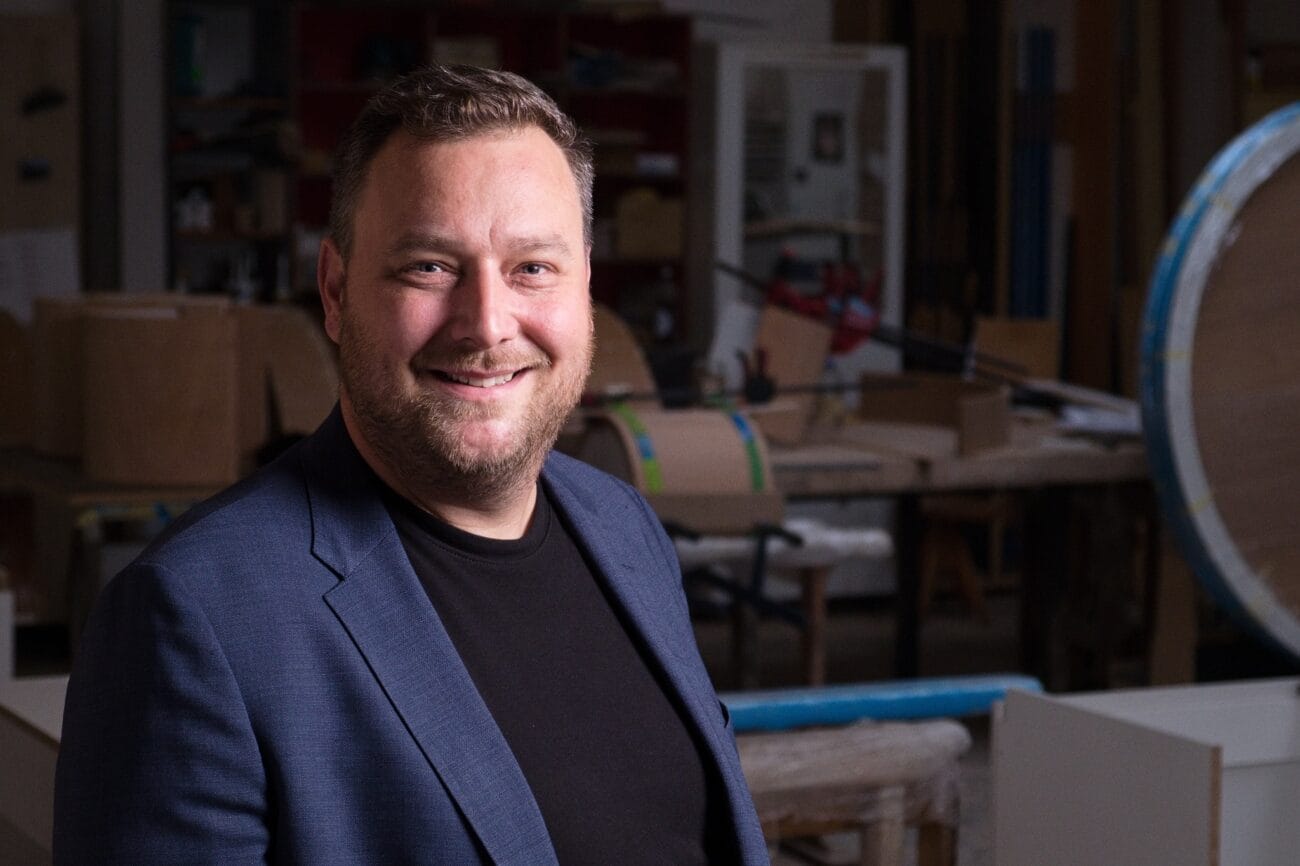
We are gradually replacing paper documentation with a digital management system, supported on the shop floor by thirty new monitors.
Michal Navrátil, managing director
A more efficient operation as the basis
Wider optimisation of the operation goes with it. We have long been investing in technologies and processes that use energy and capacity more efficiently. It is not about individual measures but about gradually tuning the whole production system to be more accurate, more predictable and less demanding on resources.
Every idle period or needless step removed shows up not only in the economics of the company but in its environmental footprint.
Materials and waste as part of the answer
A significant role in our approach goes to materials and how we handle waste. Wood as a base material is a naturally sustainable choice, but our responsibility does not end there. We track where materials come from, develop work with alternative raw materials (collaboration with local producers such as Plastic Guys) and look for ways to use production offcuts efficiently, with an emphasis on getting the most from material across the whole process.
The aim is to see waste not as the end of a process but as an opportunity for further use.
The difference between 2023 and 2025 is therefore not only about numbers but about a change of approach. It is not about producing less but about producing more intelligently – with better control over the process, lower energy demands and less dependence on external inputs.

The carbon footprint to 2035
Looking ahead, we have a clear target: to cut the carbon footprint by 20% per unit of turnover by 2035. We see it as a long-term direction that takes in further digitalisation, production optimisation, work with materials and a change to the whole operation.
Sustainability is not a separate chapter for us. It is how we think about the company as a whole.
Thinking about how to reduce the impact of your interiors?
Get in touch – we build interiors that make sense in design, in operation and over time.