An introduction to the world of furniture materials
Choosing a material in furniture making is like choosing ingredients in a kitchen. Different materials can produce a similar piece, but the result differs – in looks, price, sustainability and lifespan. And because we at Woodever believe an interior should stay in good condition for years, we take material choice seriously.
There is no single best material. Each has its strengths and weaknesses and suits different kinds of space. This article will help you find your way.
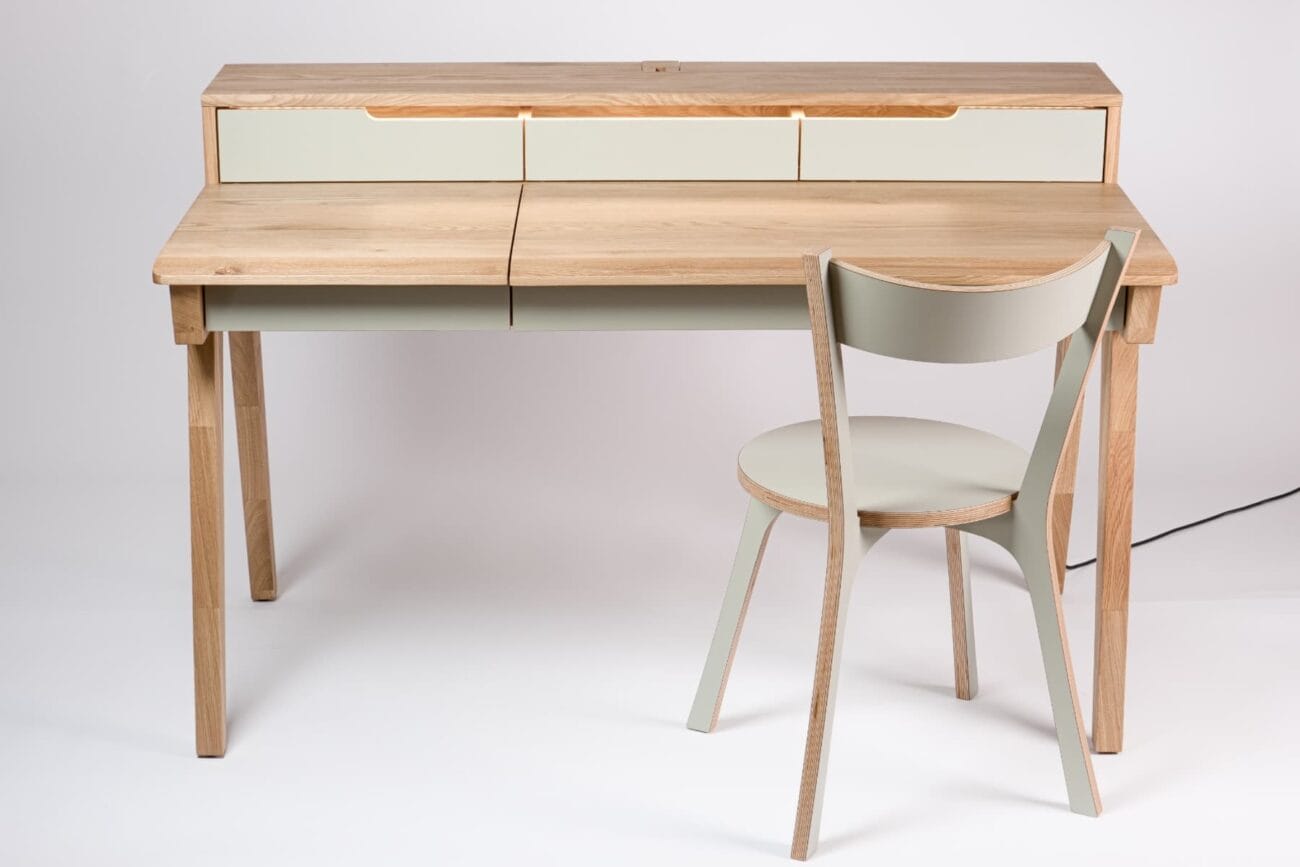
What do the joiners from Rousinov make furniture from?
Say furniture and most people picture a shape, a colour or a design style. The most important foundation, though, is inside – the material. It decides how the furniture looks, how long it lasts, what it costs and what it is like to live with. A good interior starts with a good material – so we want to show you what we work with, why, and where each one fits best.
Furniture in wood
Every material has its strengths and its limits. Solid wood is beautiful, natural and fragrant, but heavy and expensive; it works very well for standalone pieces, tables and chairs. Wooden furniture comes in other forms than solid timber, too. In the making of a table, for instance, an ideal top can be made from solid oak panel or veneered board. Such furniture keeps the natural look and properties of wood, but costs less and weighs less than the same piece in solid timber.
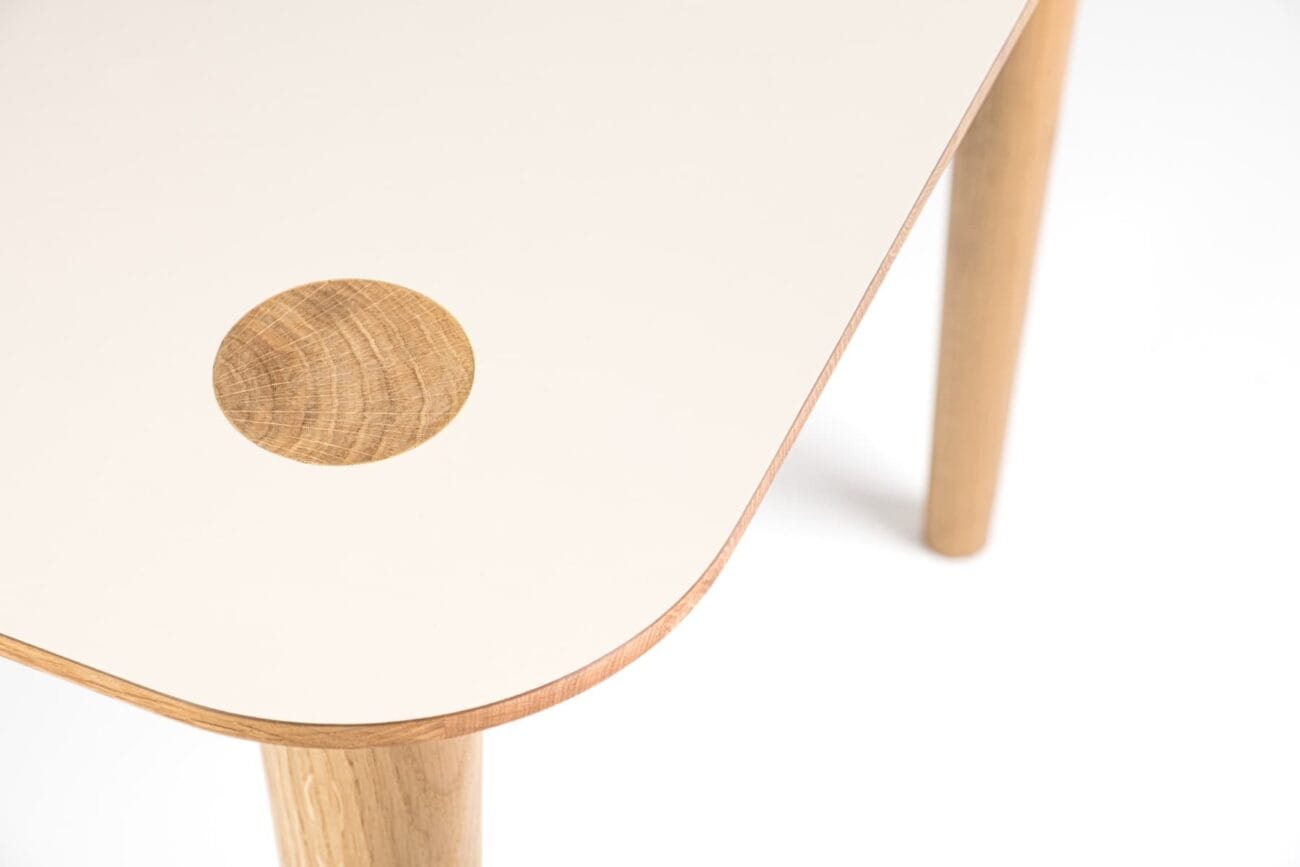
Plywood, the queen of materials
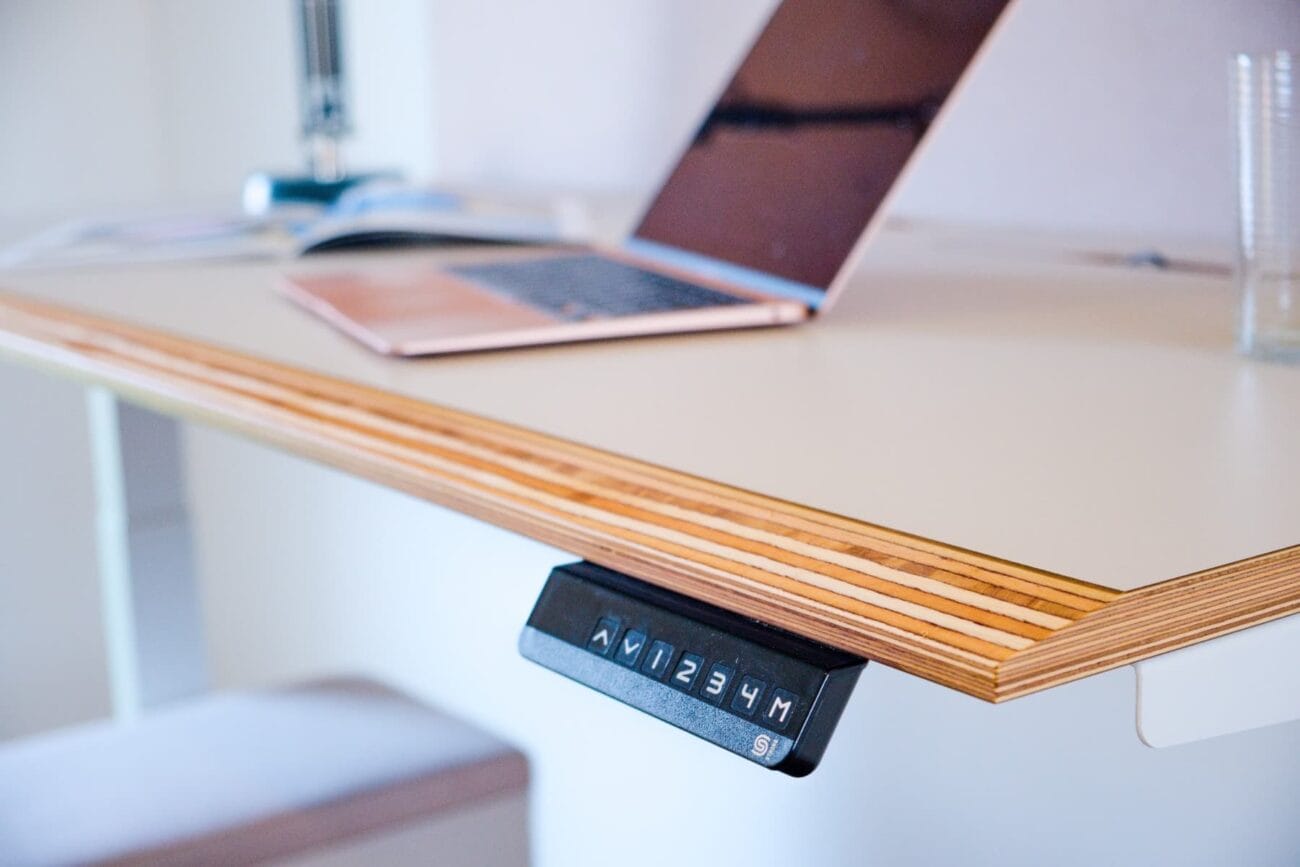
One material that keeps gaining ground is plywood (known as PDP). It is strong, durable and in some cases lighter than solid wood, depending on the species. It suits cabinets, shelving and chests of drawers. But not all plywood is equal: quality depends on the species used – usually birch or beech – and on the pressing technology.
The top-grade plywood we use at Woodever even has a handsome pattern in the cut edge. With it we create design-led furniture with beautiful details– a chamfered edge on an office desktop, for example. Plywood is also an excellent material for making curved furniture.
Melamine board is not the same as laminate
Melamine board or laminate? They are not the same thing. The two terms sound alike but describe different materials, and they get mixed up constantly. In plain terms: melamine-faced board is more common and cheaper, but less durable, while laminate (HPL) is stronger and suits more demanding use. Let us clear it up.
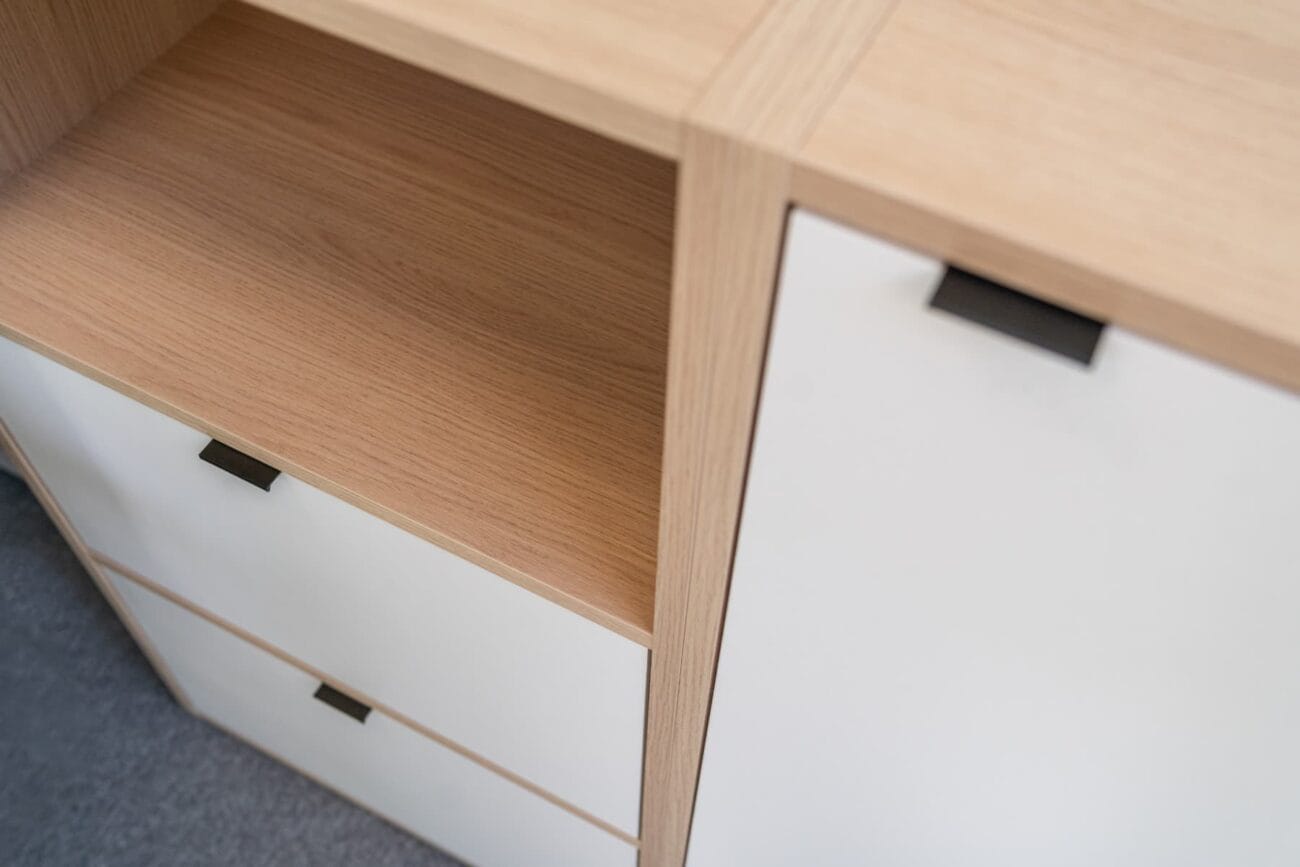
Say melamine-faced boardand most people picture the surfaces of cabinets, tables or shelves. Technically it is a chipboard panel covered with decorative paperimpregnated with melamine resin. The result is an affordable material with a wide choice of decors and easy upkeep. It is used for whole pieces – not just carcasses but also doors and fronts. It suits ordinary domestic use, but its lower mechanical resistance makes it less than ideal for worktops or table tops in busy settings.
When ordinary melamine board is not enough, in comes HPL, high-pressure laminate. It is made by pressing several resin-impregnated layers of paper under high pressure and heat. The result is a very durable surfacebonded to a substrate such as chipboard or MDF. In greater thicknesses it can be used on its own as compact HPL – a rigid, hard-wearing material for changing rooms, kitchens and public buildings. HPL resists moisture, chemicals and wear, which makes it an excellent choice wherever long life and easy maintenance matter.
Artificial stone
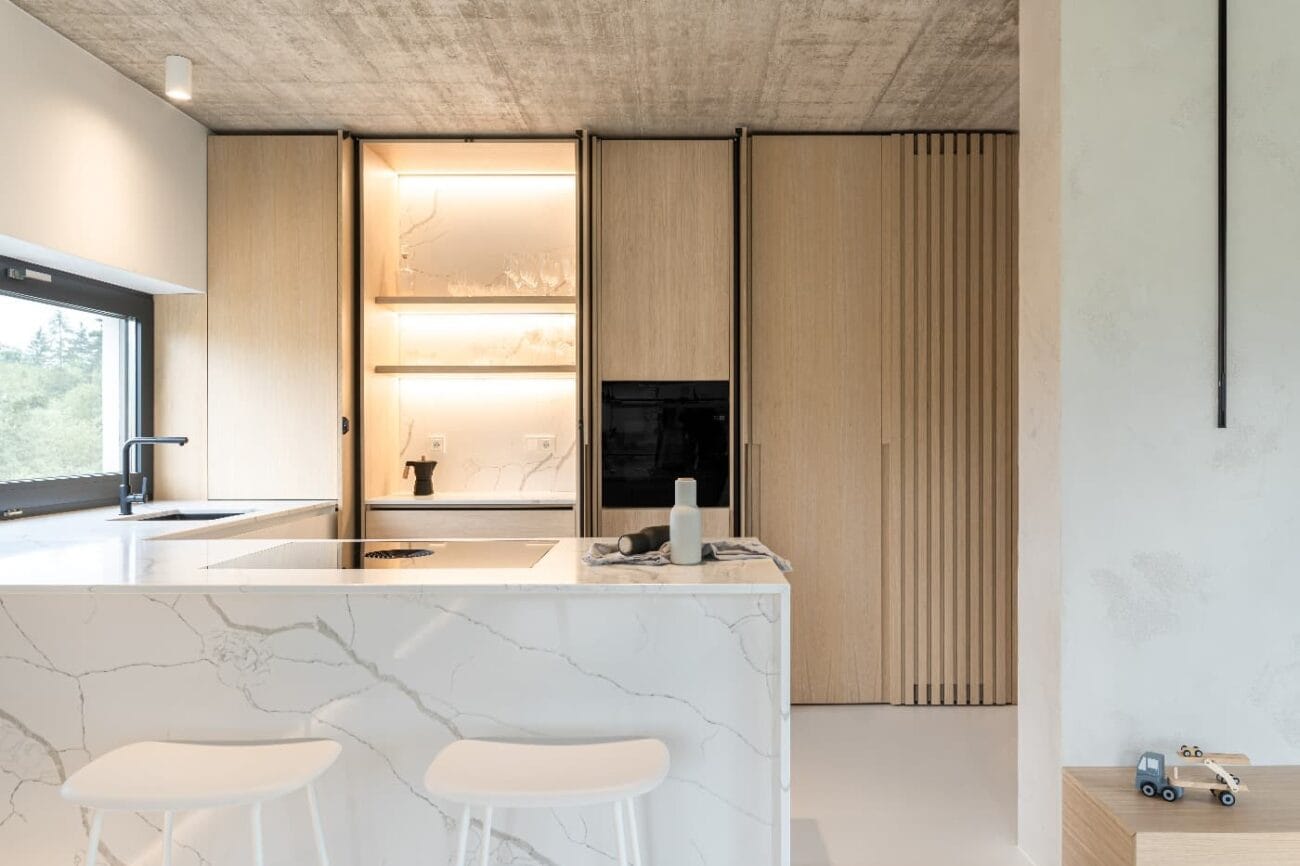
Artificial stone (Corian, Technistone and others) has its place in a modern interior too – a seamless, elegant, easy-care material excellent for worktops, reception desks and bathroom elements. Against natural stone it has clear advantages: it is tougher, hygienic and non-porous.
Sustainable materials
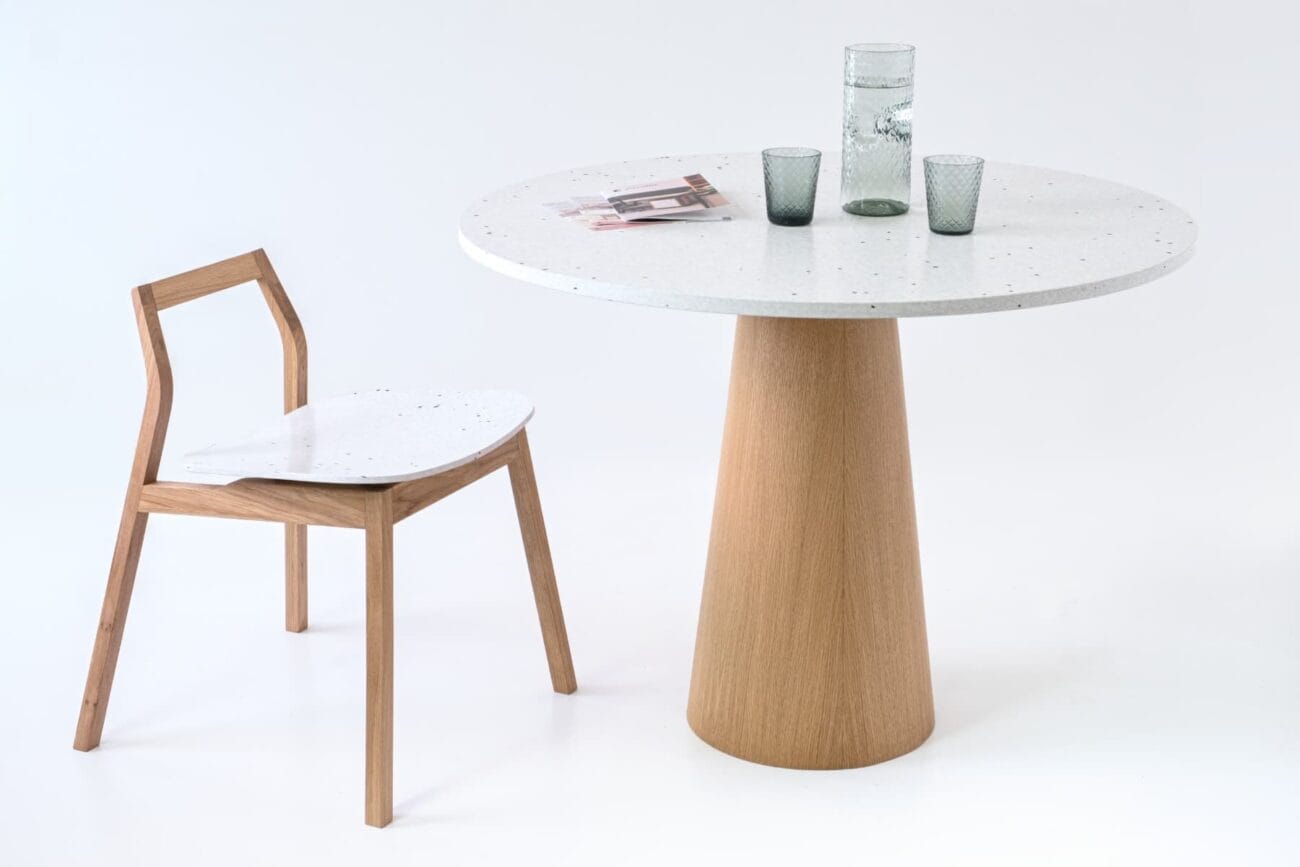
More and more, our work also focuses on materials with an environmental dimension – for example recycled plastic boards Panely Minus or boards made from recycled beverage cartons, Packwall. These materials support sustainability and look distinctive. We have worked with recycled plastics for several years and they are now part of our standard material portfolio. We keep looking for new routes and are developing further sustainable materials that are kind to the environment, stand up to daily use and still look contemporary
Combining materials on the way to the ideal solution
When designing furniture we routinely combine materials to strike the best balance of looks, durability and cost. A kitchen, for example, might have a worktop in hard-wearing high-pressure laminate (HPL) and doors in melamine-faced board (LTD) with a wood decor. Design-led schemes increasingly use plywood as well, on carcasses or visible parts where its layered edge and natural character come into their own. Plywood and melamine board combine in the same way – the strength, stability and looks of plywood alongside the wide decor choice and practical qualities of melamine-faced chipboard.
Also coming to the fore are combinations of conventional and recycled materials – a chair with a coloured seat in Panel Plus recycled plastic board and legs in solid oak, for instance. The same principle works for other pairings, such as a melamine carcass with doors in Packwall recycled plastic. The result is a piece that is durable, visually interesting and environmentally sound.
Our main materials at a glance
In the end it is not about finding the best material. It is about finding the most suitable one, or the right combination – for the function, the budget, the style and the expectations. That is exactly what we are glad to help with at Woodever. In further articles we will introduce each material in more detail, including advantages, drawbacks, suitable uses and examples from practice.
- high-pressure laminate (HPL)
- plywood (PDP)
- melamine-faced board (LTD)
- veneer
- solid wood
- solid oak panel
- artificial stone (Technistone, Corian and similar)
- recycled plastic boards (Panely Minus)
- boards from recycled beverage cartons (Packwall)
If all those LTD, HPL and other abbreviations are making your head spin and you need advice on which materials to choose for your office, restaurant or home, we are here for you. Woodever builds on decades of experience and we will gladly help you find a solution that matches your taste and your budget. Get in touch.