How curved furniture is made for modern interiors
Curved forms are now a signature element of contemporary architecture. Curved furniture turns up in offices, hotels, restaurants and private interiors, giving spaces a more natural, flowing feel. But design alone is not what stands behind every elegant curve. Turning an architectural design into reality means bringing together the structural solution, the right material and the production technology.
That is where our work begins.
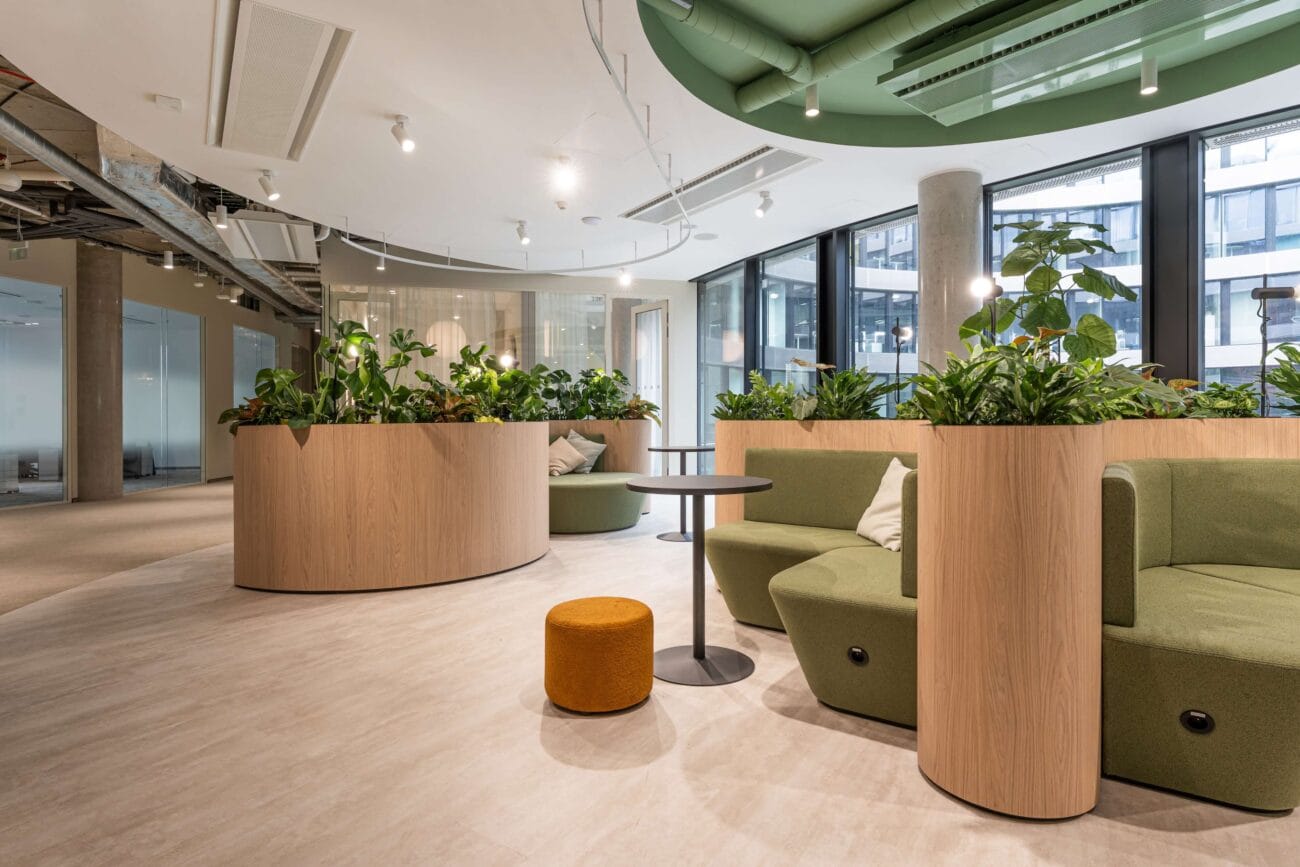
We do not only bend plywood
Mention curved furniture and most people picture plywood. Modern production offers far more than that. Depending on the design, we can also work with MDF, composite materials or sheet metal. The structural element can then take a range of finishes – high-pressure laminate (HPL), natural veneer, lacquered surfaces or upholstery.
The results include reception desks, furniture runs, wall and column cladding, acoustic elements and non-standard fitted units that combine a technical function with clean design.
One challenge we tackled recently was bending material from Plastic Guys. This innovative material is made by recycling plastic waste and is an interesting alternative to conventional board materials. As a sustainable product with a strong aesthetic character, working it calls for an individual approach.
Projects like this move us forward. We keep testing what new materials can do and looking for ways to use them in non-standard interior production.
We are currently also working on developing furniture from hemp boards made in collaboration with Mendel University in Brno. We see this material as an interesting route to more sustainable interior design and a chance to widen what bespoke production can do.
You can read more about the project in our article on hemp furniture and the materials of the future.
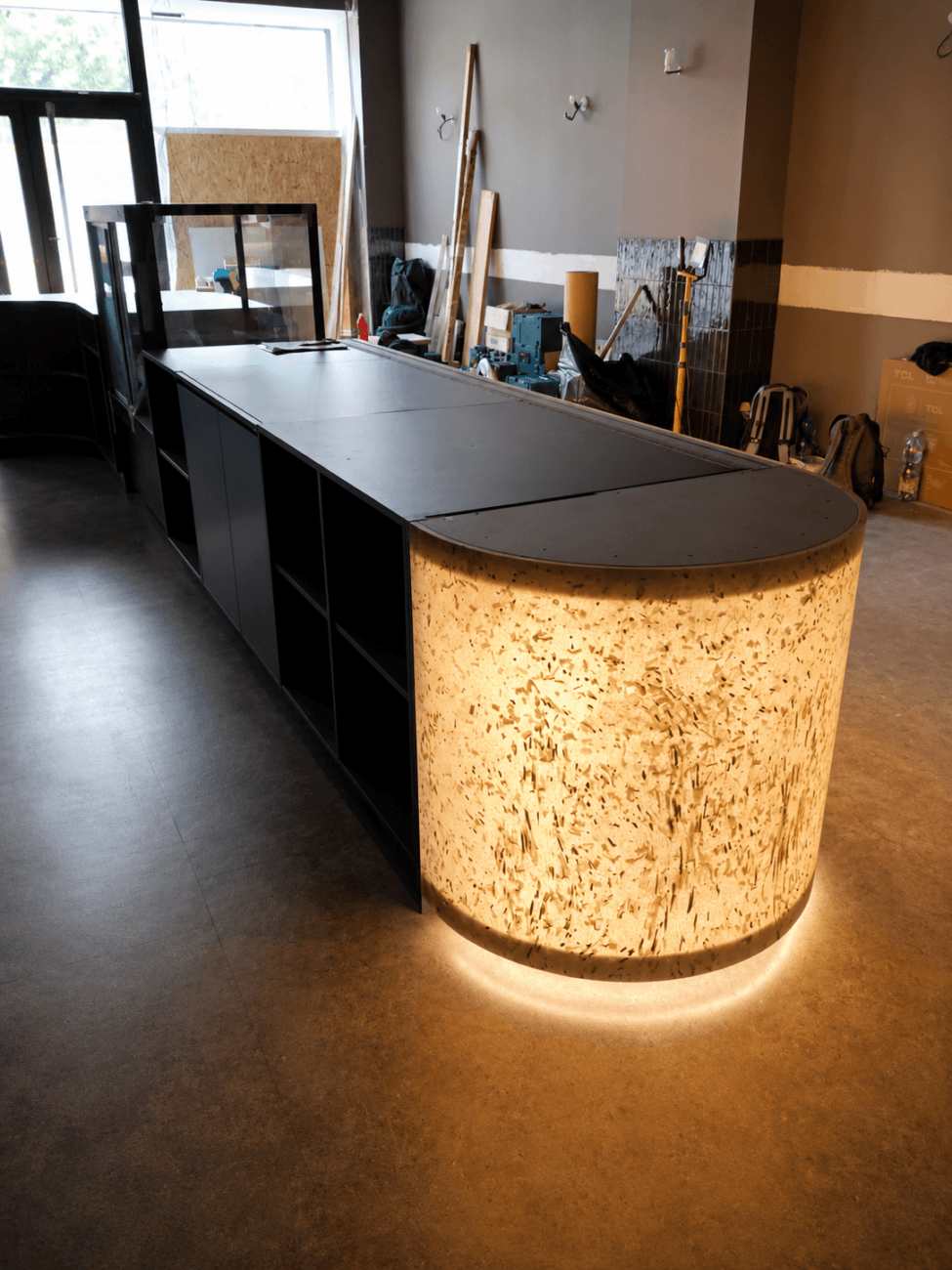
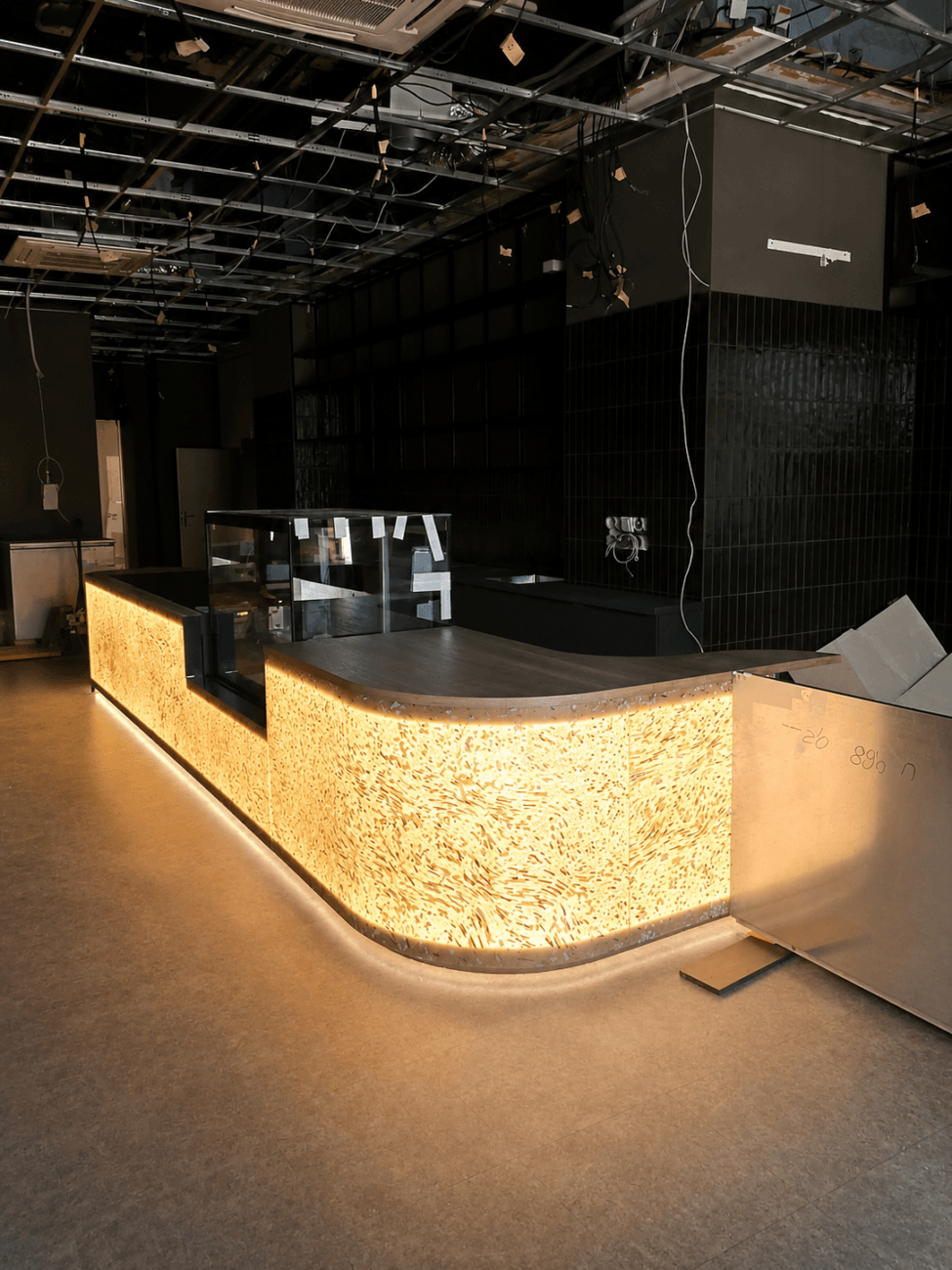
Curved furniture has no universal rules
A curved element can look simple. In practice, a whole range of factors shapes how it is made. The technology depends on the radius required, the structural solution, the final look, the chosen finish and how the element will be used. The specific material matters too: two laminates of the same thickness from the same manufacturer can behave completely differently when bent.
Sheet size is another important constraint. If the material does not come in generous dimensions, it can complicate the whole design. This is why non-standard work has no universal rules. Every design needs an individual assessment of both the structure and the production method.
„Architects are designing ever bolder shapes and material combinations. Our role is to find a way to turn their vision into reality so that it is technically correct, manufacturable and still true to the original intent. With curved elements, the collaboration between architect, project manager, engineer and the workshop is absolutely critical.“
Lucie Křížová, project manager
The structure decides the result
A curved element does not begin in the workshop but in engineering preparation.
That is where the right technology is chosen, the material build-up designed, and the junctions, the jointing method and the eventual installation worked out. Good engineering preparation keeps the architectural idea intact while making sure the element can be built, is accurate and works for years.
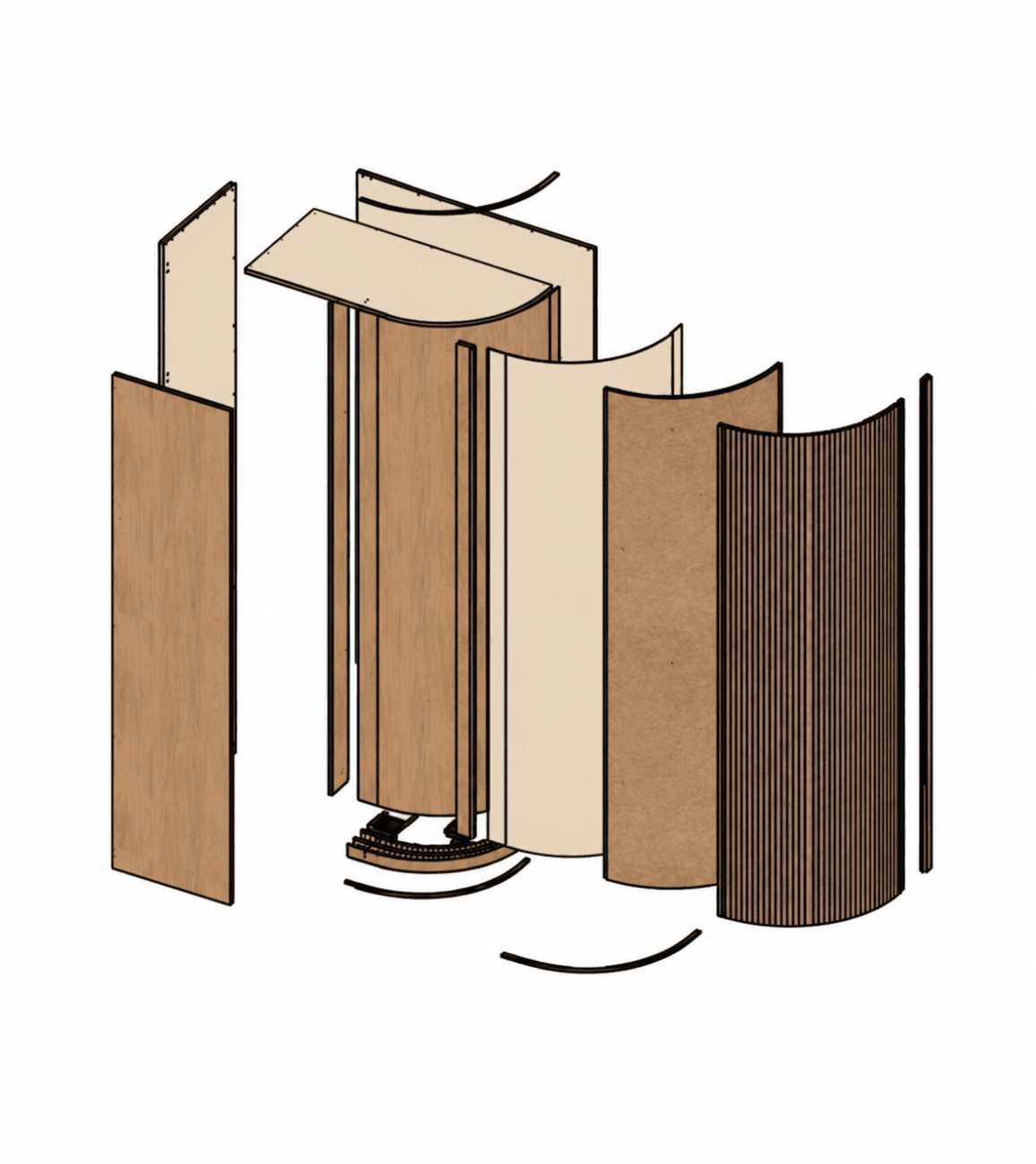
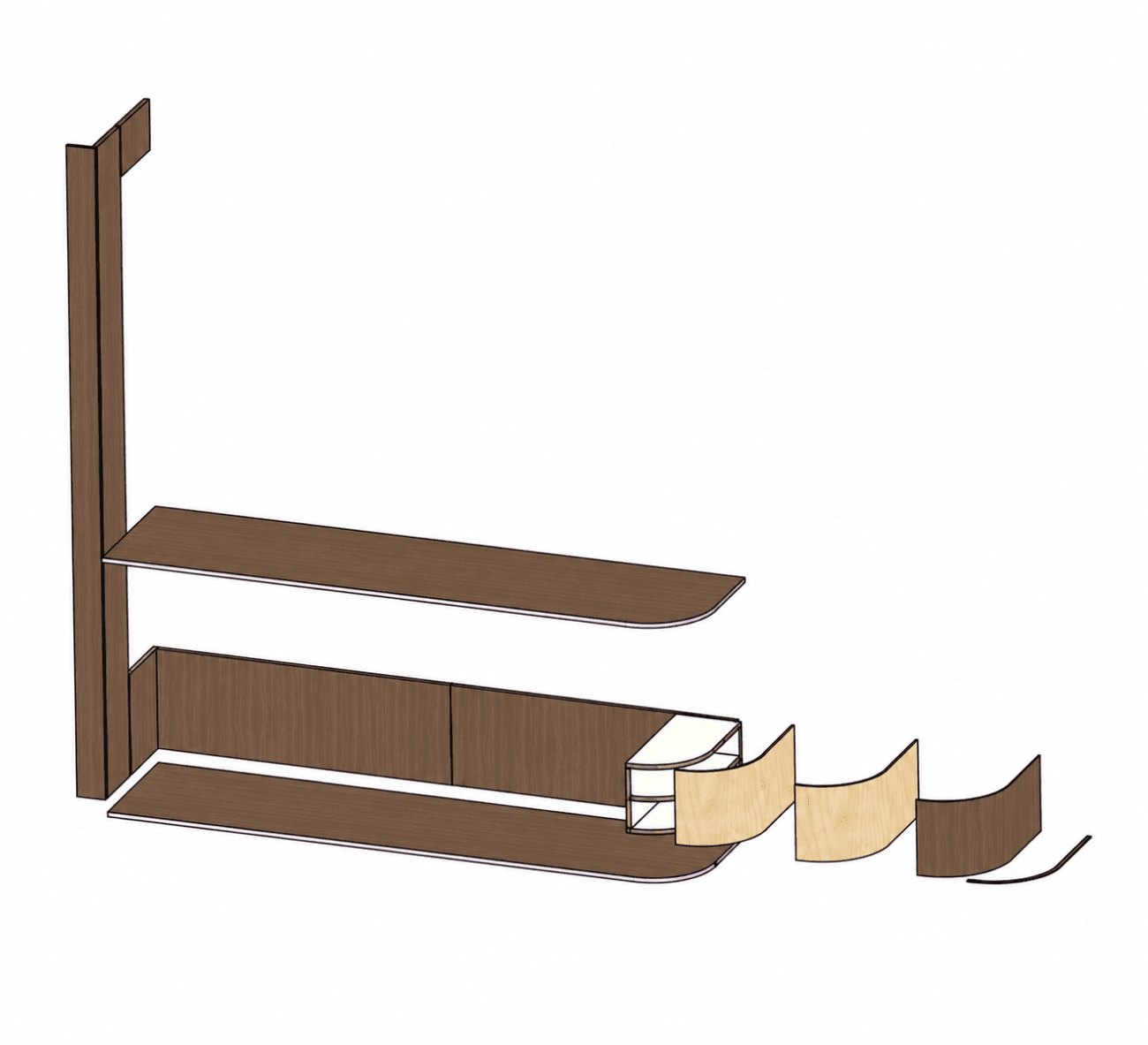
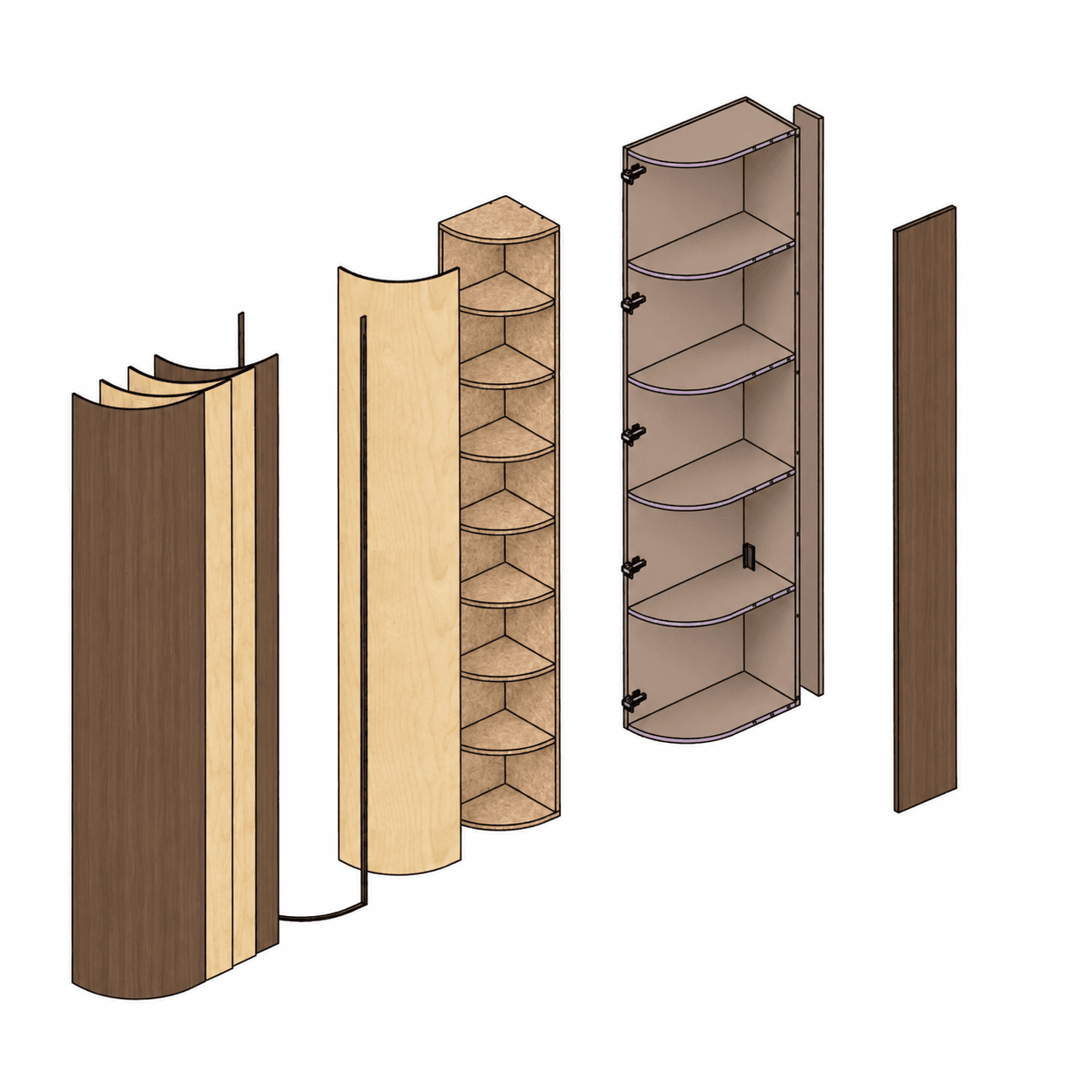
In production we use different technologies depending on the project, among them routing, laminating and pressing. We keep developing these methods and looking for new ways to build ever more demanding shapes.
Behind every successful curve are dozens of decisions you cannot see in the finished product. Engineering preparation is where you verify whether the proposed shape can be built, which material suits it best and how it will be made and assembled. The more complex the design, the more good preparation matters.
Kristýna Wolfová, head of the engineering department
The most common design challenges
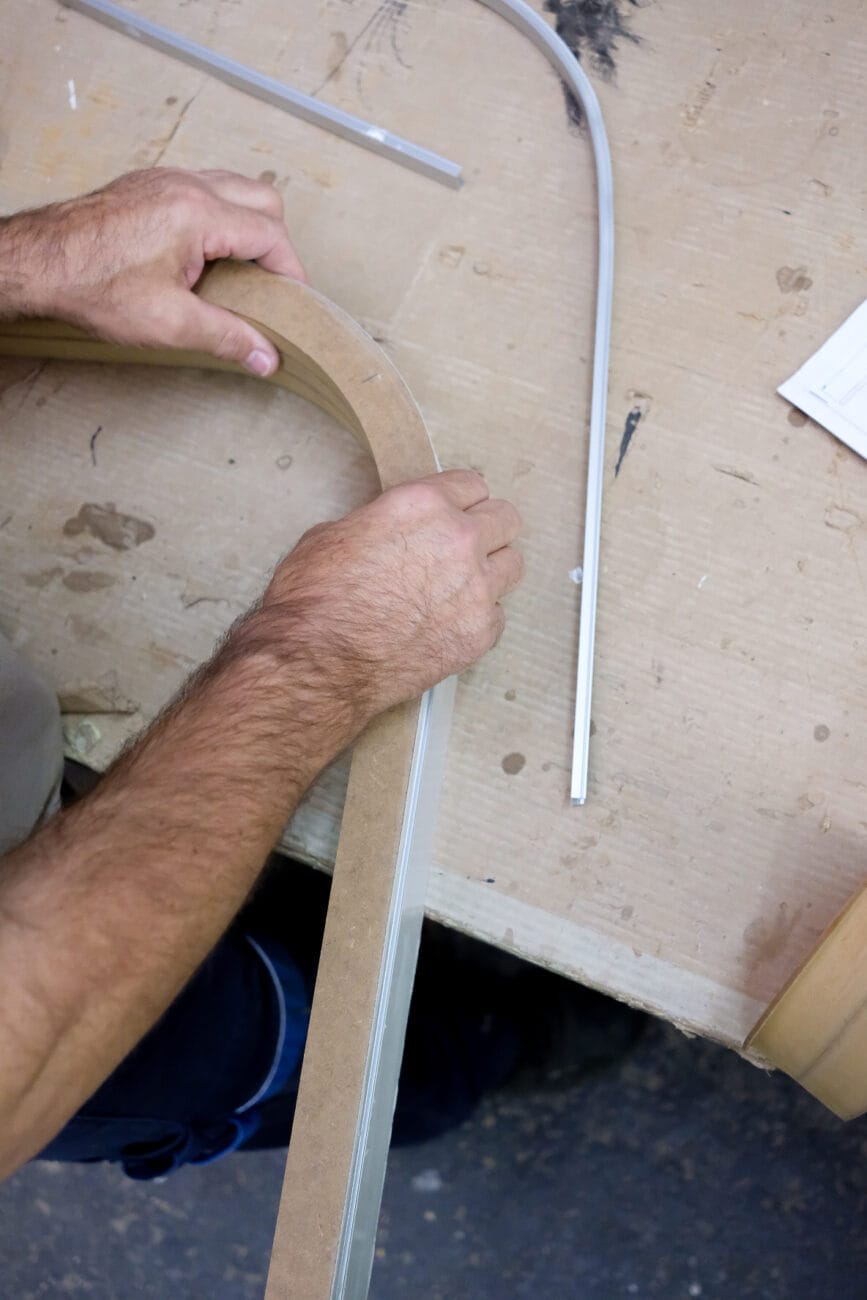
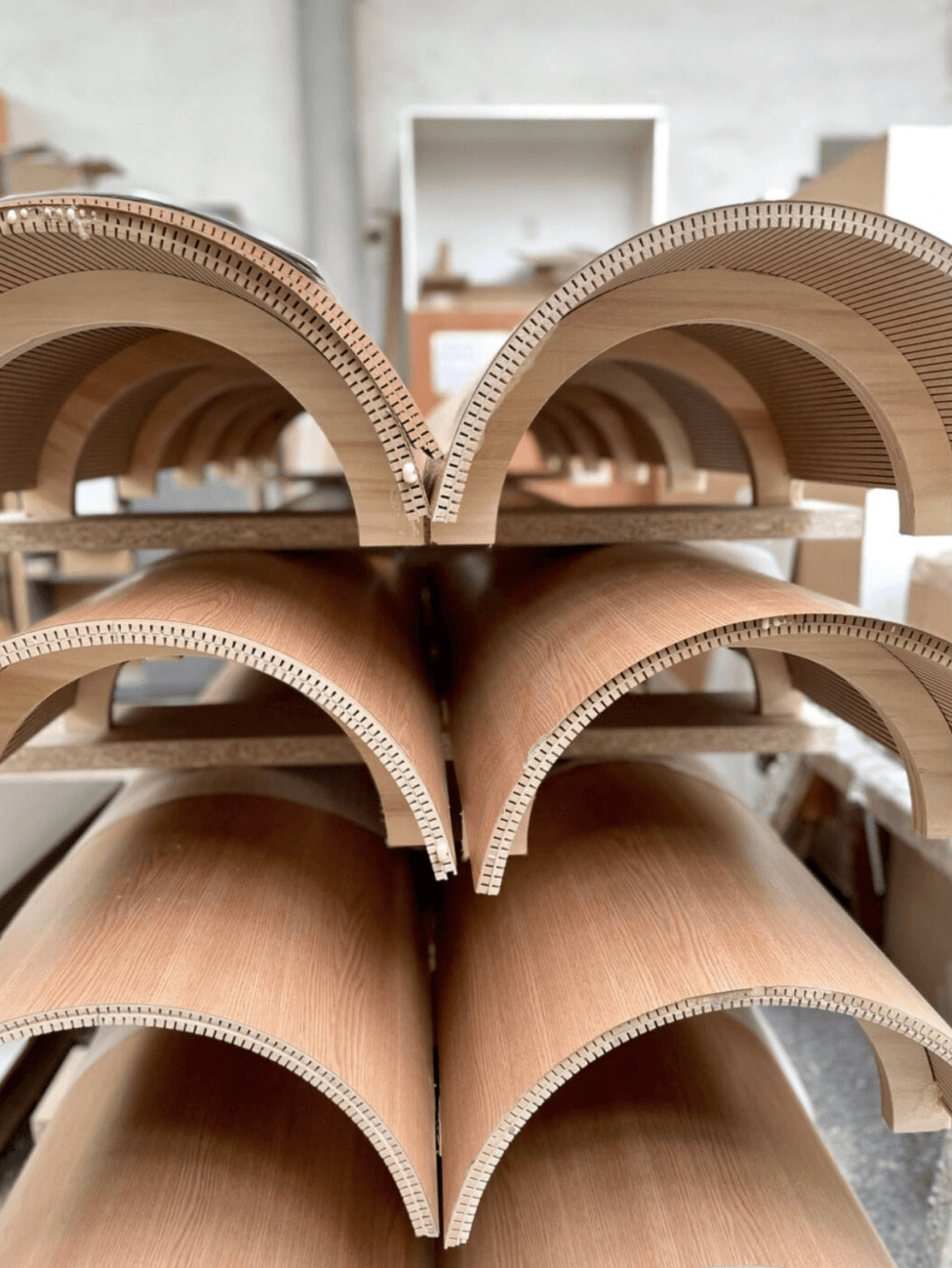
More complex shapes bring specific engineering challenges. In practice we meet two situations most often.
- One is radii that are too tight for the chosen material or its finish.
- The other is elements whose dimensions exceed the sheet size of the selected material.
Neither situation necessarily means the design cannot be built. In most cases there is another structural or technological solution that keeps the original architectural intent and still respects what production can do.
The earlier production joins in, the more options there are
On non-standard interiors it pays most to involve the maker during design. With architect, engineer and workshop working together, you can find solutions that are not only aesthetically clean but technically sound, economical and ready for a trouble-free installation.
Curved elements are no longer just a design detail. They show how closely architectural vision, engineering know-how and modern production technology have to work together to create interiors that would have been impossible only a few years ago.
Designing an interior with non-standard shapes or curved elements?
Bring us in at the design stage. Together we will find the construction and production solution that keeps the architectural idea intact and gets the project ready for precise manufacture and installation.